In this guide
Answer and introduction
Assessing a mixed-breed coat starts with a few simple, systematic checks: look and feel the coat for length, texture, density and undercoat presence, check skin condition, note any mats or seasonal shedding, then build a routine that matches those findings. A clear assessment makes home care efficient and tells you when to book a professional groomer or ask your vet to examine skin or coat concerns.
Mixed-breed dogs can combine coat traits from very different parents. That variety means a short list of practical observations will save time, reduce stress for your dog and help you pick the right brushes, bath frequency and professional services. These instructions are written for UK owners — including those near Barton Seagrave and Kettering — and point you to local salon support when a groomer’s skill is needed.
Quick visual and touch checklist (do this first)
- Look at the overall coat length and outline: is it uniformly short, long, or mixed (long on ears and tail, short on body)?
- Run your hand along the coat to assess texture: smooth, coarse/wiry, silky, curly or dense and plush?
- Check for an undercoat: part the hair and feel for a softer, downy layer beneath the outer coat.
- Scan for problem areas: mats, debris, damp-smelling patches, redness, scabs, flaking or irritated skin.
- Note shedding: loose hair comes away easily with a light stroke (heavy seasonal moult suggests an undercoat).
Keep a simple written note after this check — two or three bullet points are enough — so you can track changes across seasons.
Key coat characteristics to identify and what they mean
- Texture (feel)
- Smooth/short: low-maintenance daily brushing, occasional bath. See our short-coated guidance.(/blog/Grooming guide for Labradors and other short‑coated breeds)
- Silky/long: prone to tangles and mats along ears, chest and tail — regular gentle brushing needed.
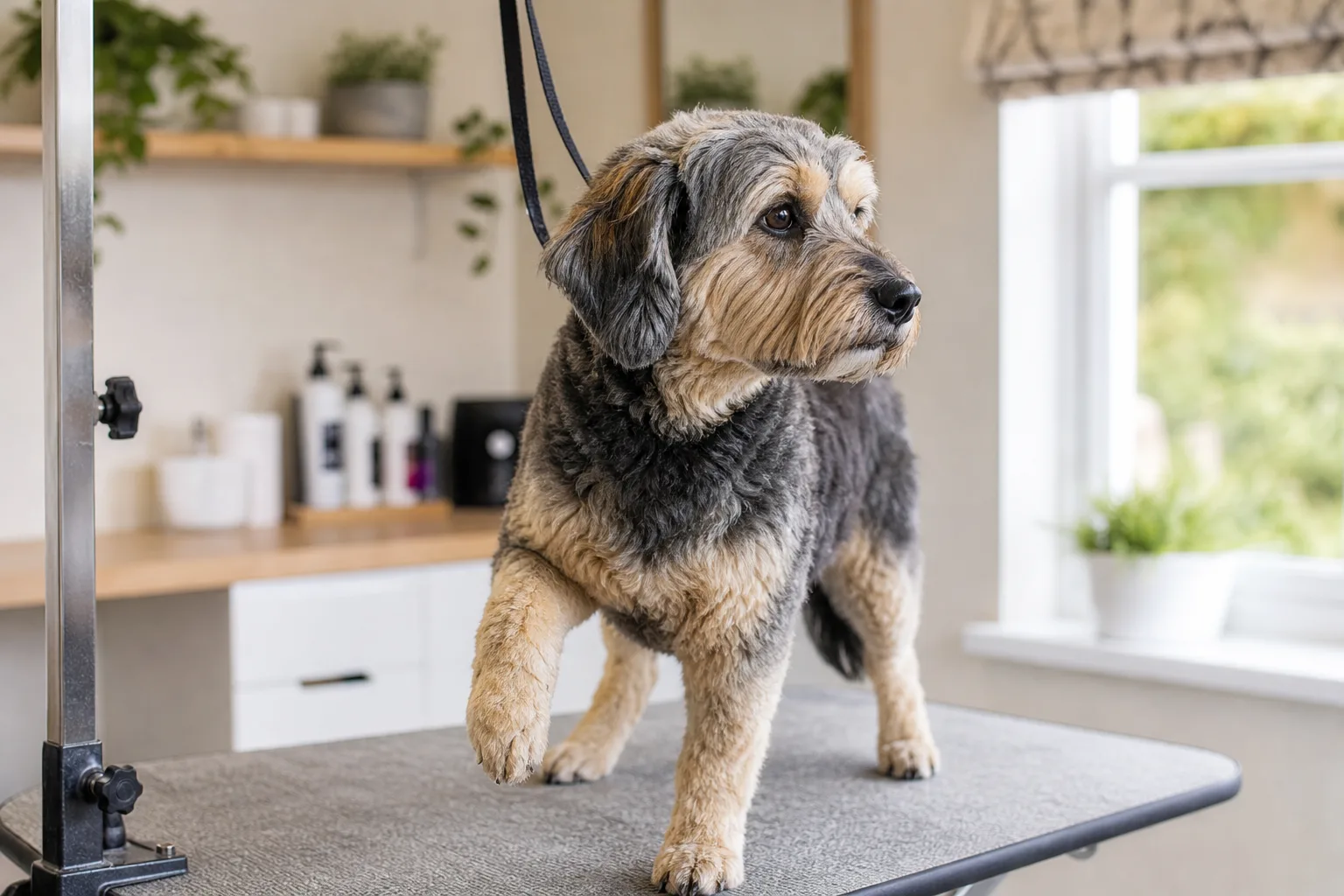
- Curly/woolly: benefits from frequent combing to stop felted tangles; many curly coats need professional clipping or scissoring for shape.
- Wiry/broken: often needs hand-stripping or professional trimming to keep texture and reduce matting. Our guide to wiry coats explains this in detail.(/blog/wiry-and-broken-coats-practical-maintenance-for-terrier-type-dogs)
- Density and undercoat
- Single, short coat: usually minimal undercoat, sheds less but still needs regular brushing.
- Double coat: outer guard hairs with a warm downy undercoat. Requires careful de-shedding and seasonal attention; avoid shaving without professional advice. For more on double coats, see our specialist guidance.(/blog/care-for-double-coated-breeds-essential-principles-for-owners)
- Curl and wave
- Tight curls trap debris and moisture — use conditioning sprays sparingly and comb thoroughly while wet when recommended by a groomer.
- Wavy coats can mat in areas of friction (collar, armpits) and benefit from routine detangling.
If you find skin sores, persistent flaking, strong odour or sudden coat loss, stop assessing and ask your vet to examine the dog — these are signs a health issue may be present.
Typical mixed-breed coat scenarios and practical care pointers
- Short-smooth body with feathered ears/tail
- Brush: rubber or bristle brush weekly; soft comb for feathering.
- Bath: as-needed — usual UK frequency guidance applies; see our bathing post.(/blog/bathing-frequency-signs-your-dog-needs-a-wash)
- Professional: a simple tidy with a bath-and-brush keeps feathering tidy.
- Double-coated mix (thick undercoat with longer top coat)
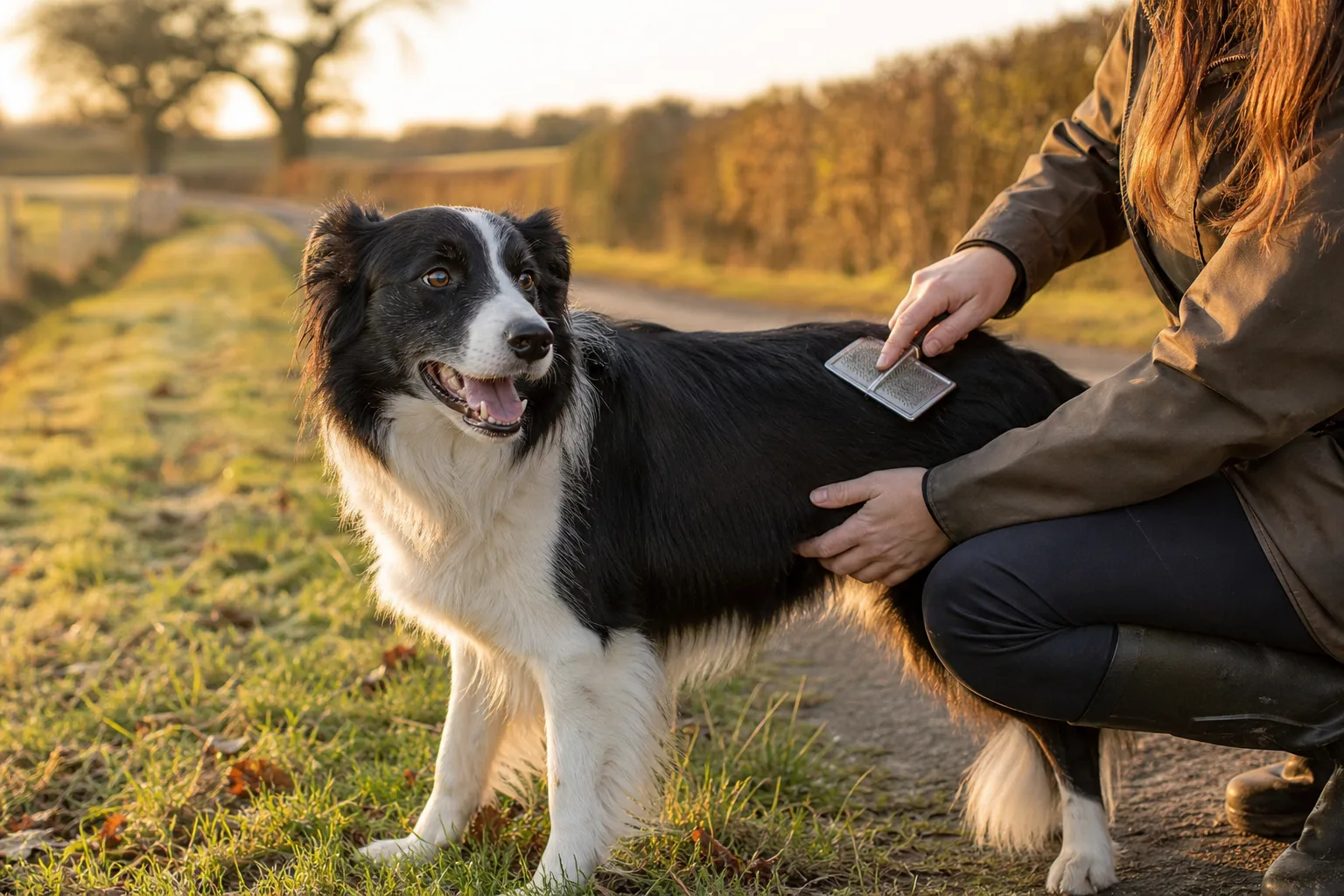
- Brush daily in moult season with a de-shedding tool and a slicker for loose undercoat.
- Never shave the undercoat without professional advice; it can damage insulation and coat regrowth. Learn more about managing seasonal change.(/blog/Dealing with Seasonal Coat Changes Without Resorting to Shaving)
- Long, silky coat with prone-to-matting areas
- Daily gentle brushing, use a detangling spray recommended for sensitive coats, and keep collars loose or use padded harnesses.
- Tidy trims around sanitary areas and paw fur can be done by a groomer; avoid scissor work at home.
- Curly or dense wool-like coat
- Regular combing, occasional clipping by a trained groomer and frequent checks for matting close to the skin.
- Hand-stripping may be appropriate for some terrier crosses — leave this to a professional. See our article on hand-stripping for when it's the right choice.(/services/hand-stripping)
Tools, frequency and safe techniques for home care
- Essential tools: slicker brush, metal comb, de-shedding tool (if undercoat present), rubber curry brush for short coats, and a pairs of blunt-nosed grooming scissors kept for tidy trims on long fur only — but only use scissors for very small, surface trims if you are confident.
- A routine to aim for:
- Short coats: brush 2–3 times a week.
- Long or silky coats: daily brushing, with a full comb-through 2–3 times weekly.
- Double coats: daily brisk brushing during moult and gentle gloving strokes off-season.
- Safety notes: never force a matt out with pulling; instead use a detangling spray and work from the edges inwards. If mats are tight to the skin, leave removal to a professional groomer rather than risking skin injury.
For help choosing the right tools and learning safe use, our guide to brushes and combs is a practical companion.(/blog/choosing-the-right-brush-and-comb-for-your-dogs-coat)
When to book a professional groomer or seek veterinary input
Book a professional groomer when:
- Mats are tight or numerous and you’re unsure how to detangle safely.
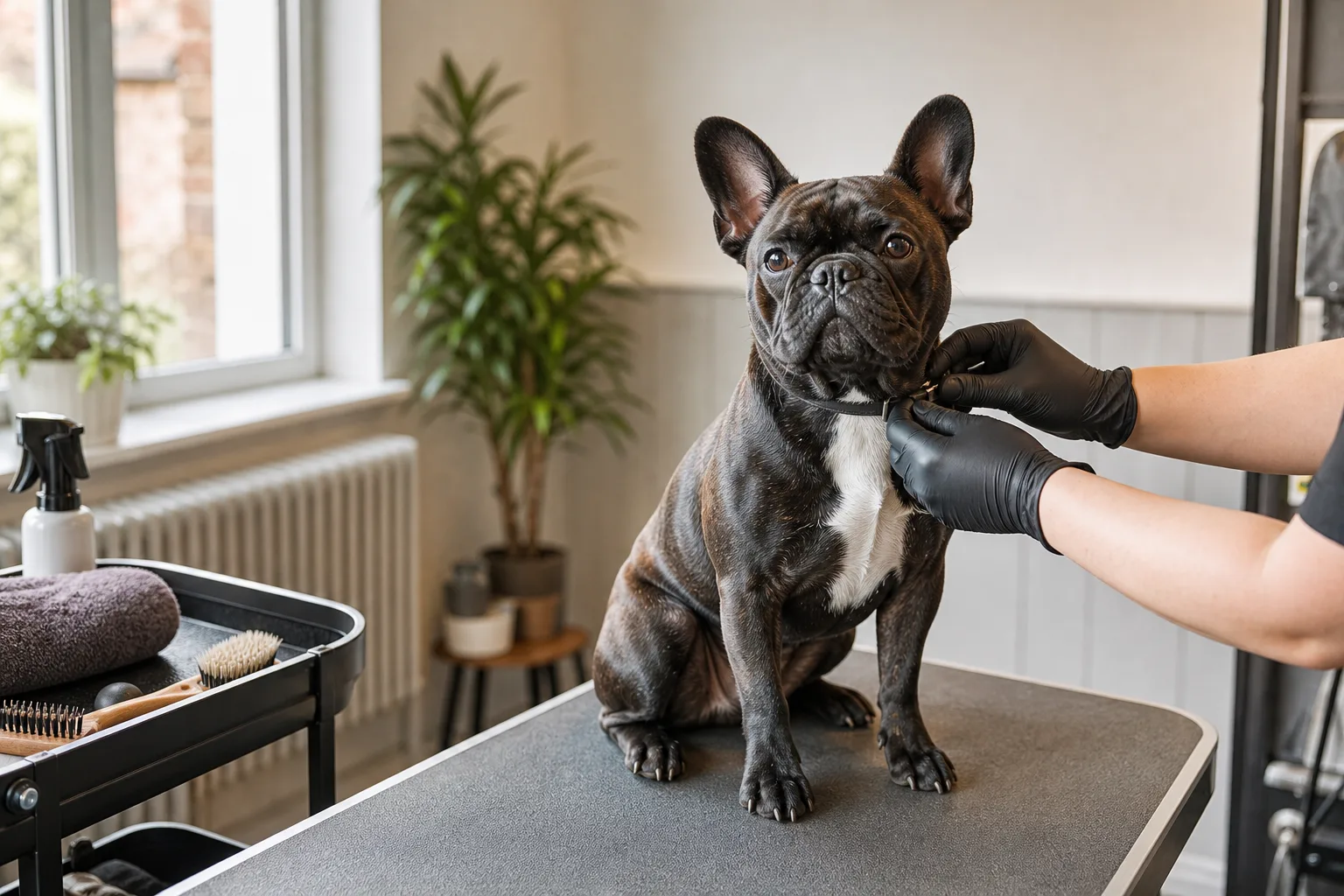
- The dog needs coat thinning, contouring or a specific breed-style clip you cannot do at home — a Full groom gives a comprehensive service for mixed coats.(/services/full-groom)
- You want assistance establishing a routine for a newly adopted mixed-breed.
See a vet when:
- You find sores, persistent redness, hair thinning in patches, or the dog is scratching excessively.
- There’s sudden heavy shedding accompanied by lethargy or changes in appetite.
If you’re preparing a dog for a salon visit, our safe detangling guide offers step-by-step prep owners can do at home to reduce stress and speed the groom.(/blog/safe-detangling-before-a-salon-visit-gentle-at-home-techniques-for-owners)
Building a simple personalised care plan (example)
- Week 1 (assessment): Do the visual and touch checklist, note problem spots and pick tools.
- Weeks 2–4 (habituation): Short, calm brushing sessions for 5–10 minutes every other day; reward with treats to create positive association.
- Month 2 onward (maintenance): Follow the brushing schedule for the coat type, add a professional bath-and-brush or full groom every 6–12 weeks depending on coat and lifestyle.
Adjust timing for working, outdoor or highly active dogs and for seasonal moult. Keep a small diary — one line per week — to track coat condition and any skin changes.
Conclusion
A clear, repeatable assessment makes grooming a predictable and stress‑free part of life with a mixed-breed dog. Start with the look-and-feel checklist, match tools and frequency to the coat’s texture and undercoat, and call in a professional groomer or vet when you encounter tight mats or skin concern. In Barton Seagrave and Kettering, a reliable local groomer can show you hands-on techniques and set up a maintenance plan that fits your dog and your routine.
Related grooming guides
- Your puppy’s first groom: how to prepare and what to expect
- Bathing frequency: signs your dog needs a wash
Frequently asked questions
How can I tell if my mixed-breed dog has an undercoat?
Part the coat and feel close to the skin for a soft, downy layer beneath the outer hairs. Heavy seasonal shedding, especially in spring and autumn, also suggests an undercoat. If unsure, ask a groomer to check during a short assessment.
What should I do about small tangles and mats at home?
Use a detangling spray, hold the hair close to the skin to avoid pulling and work from the edges of the tangle in small sections with a wide-tooth comb. Stop and book a groomer if the mat is tight to the skin or causes discomfort.
How often should I book professional grooming for a mixed-breed?
It depends on coat type and lifestyle: short coats may need a salon visit every 10–12 weeks, long or curly coats every 6–8 weeks, and heavy shedders a seasonal de-shed session. A groomer can recommend a schedule after an initial assessment.
Are de-shedding tools safe for double-coated dogs?
Yes when used correctly: de-shedding tools remove loose undercoat but should not be used to shave the dog. Use short, gentle strokes and follow guidance for your dog’s coat; if in doubt, have a groomer demonstrate safe technique.
When should I see a vet instead of a groomer about coat problems?
See a vet for sudden hair loss, persistent itching, sores, inflamed or smelly skin, or behavioural changes alongside coat problems — these can indicate medical conditions that need treatment before grooming.