In this guide
Start with the answer: keep working-breed coats tidy, free of mats and functional for the job with a short, predictable routine — regular inspection, targeted brushing, seasonal management and professional help when needed.
Working dogs need coats that protect, insulate and shed water and debris — not show finishes. Practical grooming keeps your dog comfortable on the job, reduces time spent fighting mats and makes checks for skin injuries quick and reliable. The approach below works for field, farm and active companion dogs in Kettering and across the UK.
Match grooming to the dog's role
- Define the outcome: protection and functionality rather than a sculpted clip. For many working breeds that means leaving length where it protects joints and organs, removing loose undercoat and preventing mats where debris collects.
- Prioritise mobility, weather protection and easy maintenance over aesthetics.
- Plan routines around work cycles (daily for active search dogs or horses, weekly for countryside companions, monthly for lower-activity working dogs).
Daily and weekly practical checks
Short, simple checks prevent small problems becoming big ones:
- Quick daily run-through: feel for warmth, bumps, wet patches, burrs or sharp objects after work.
- Spot-brush high-risk areas (behind ears, armpits, groin, feathering on legs and tail) after muddy or brambly work.
- Wipe paws and between toes after fields or puddles — a microfibre towel is ideal.
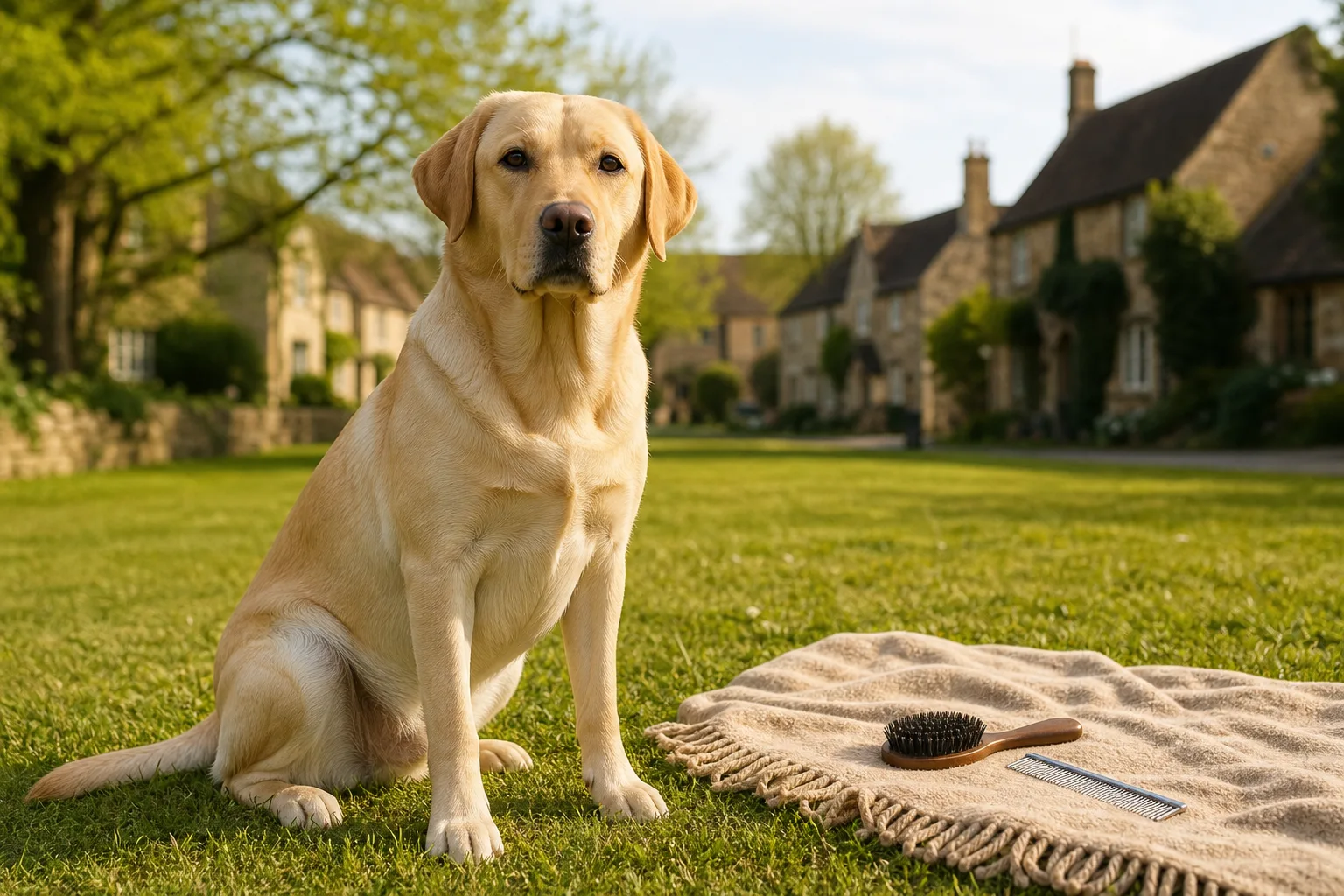
- Keep a small kit by the door: brush, comb, tick remover and a towel.
These short routines fit easily into morning or evening prep and keep the coat serviceable without lengthy sessions.
Tools and techniques that make life easier
Use tools that solve problems quickly:
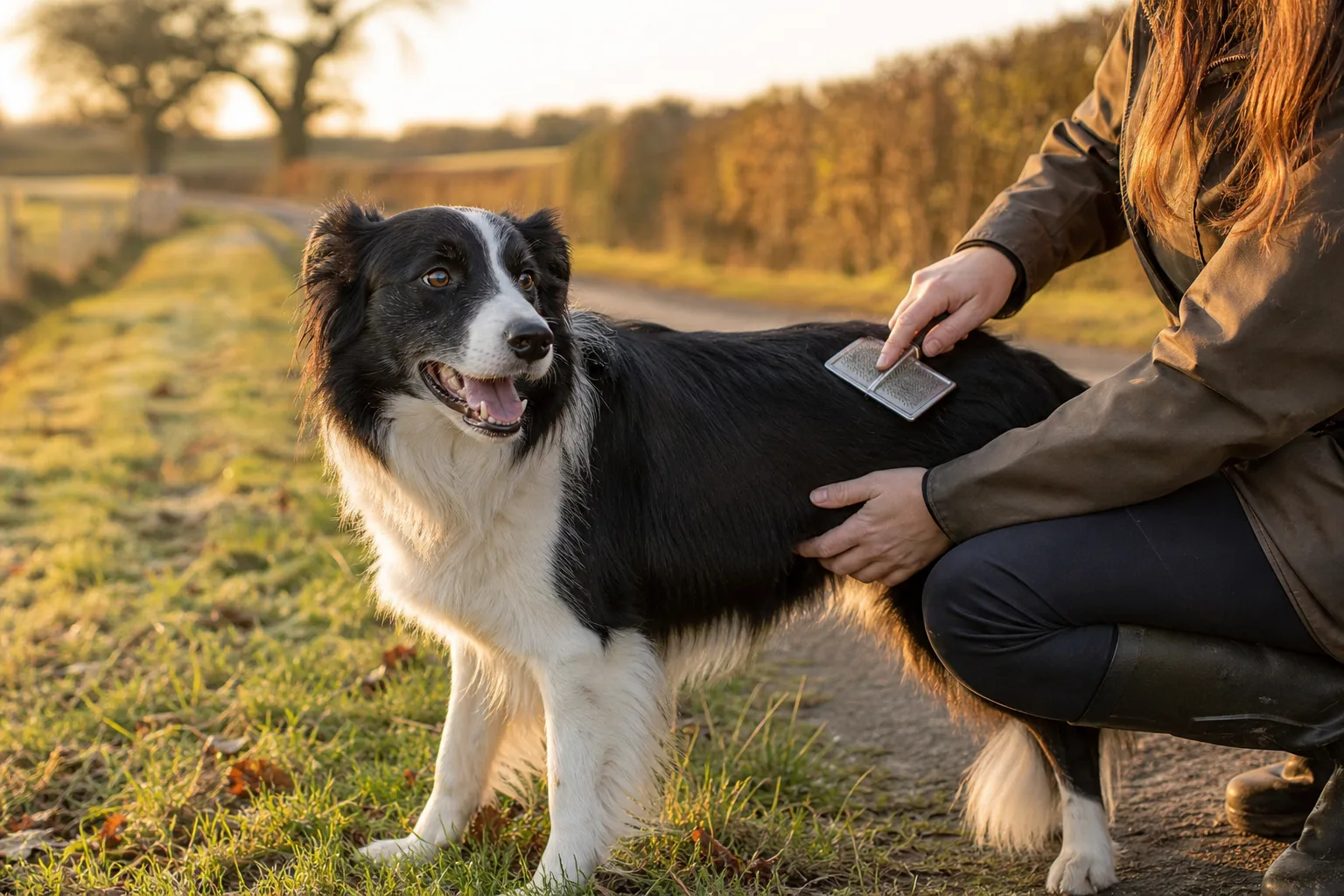
- Slicker brush or medium-pin brush for topcoat tidy-up.
- Undercoat rake or de-shedding tool for seasonal loose hair on double-coated dogs.
- Wide-tooth comb for checking feathering and removing small tangles.
- Microfibre towel and gentle drying cloth for wet dogs.
Keep sessions calm and short — five to fifteen minutes is often enough. If you’re unsure which tool suits your dog, our guide on choosing brushes and combs is practical and easy to follow: /blog/choosing-the-right-brush-and-comb-for-your-dogs-coat. For demonstrations and safe handling tips, see our coat-care tools article: /blog/coat-care-tools-every-owner-should-own-what-they-do-and-how-to-use-them-safely.
Important safety note: do not use scissors or aggressive clipping techniques at home on sensitive areas or near skin. If trimming around pads, sanitary areas or signs of matting seems needed, book a professional groomer or ask a qualified groomer for a short lesson rather than improvising.
Coat types common in working breeds — focused tips
- Double-coated breeds (Labradors, GSDs, some spaniels)
- Goal: maintain the insulating undercoat while removing loose hair that traps dirt.
- Brush weekly in normal periods; increase during seasonal moult. Our double-coat guide explains structure and safe tools. See /blog/care-for-double-coated-breeds-essential-principles-for-owners.
- Short, dense coats (some retrievers, terrier crosses)
- Quick brushing and wiping are usually enough. Bath only when the dog is dirty or smells — over-bathing removes natural oils. Read guidance on bathing frequency here: /blog/bathing-frequency-signs-your-dog-needs-a-wash.
- Wiry and broken coats (many terriers and some spaniels)
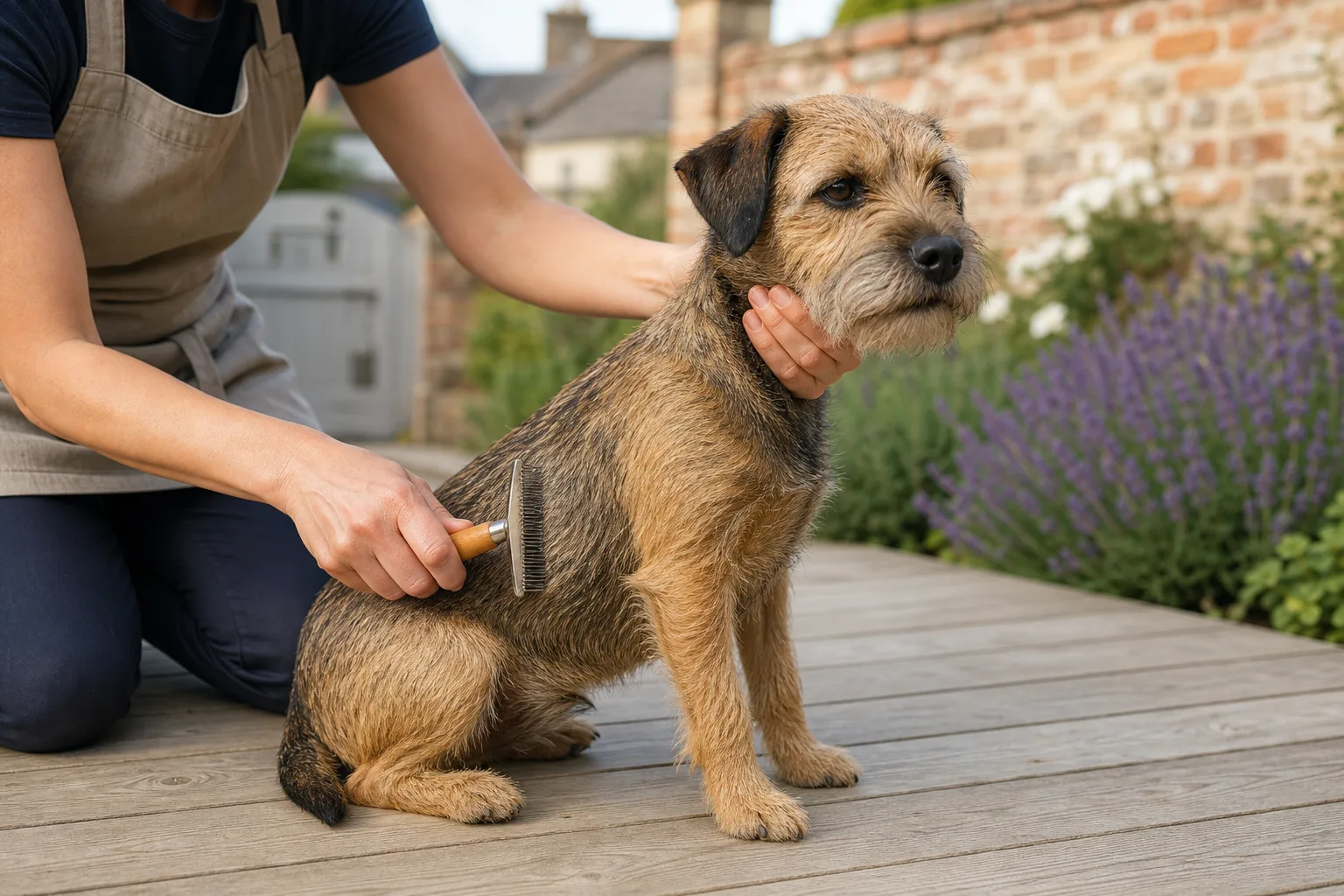
- These often benefit from hand-stripping to keep coat texture and function. If you have a working terrier, consult a groomer experienced in hand-stripping rather than clipping.
- Feathered or long coats on working spaniels
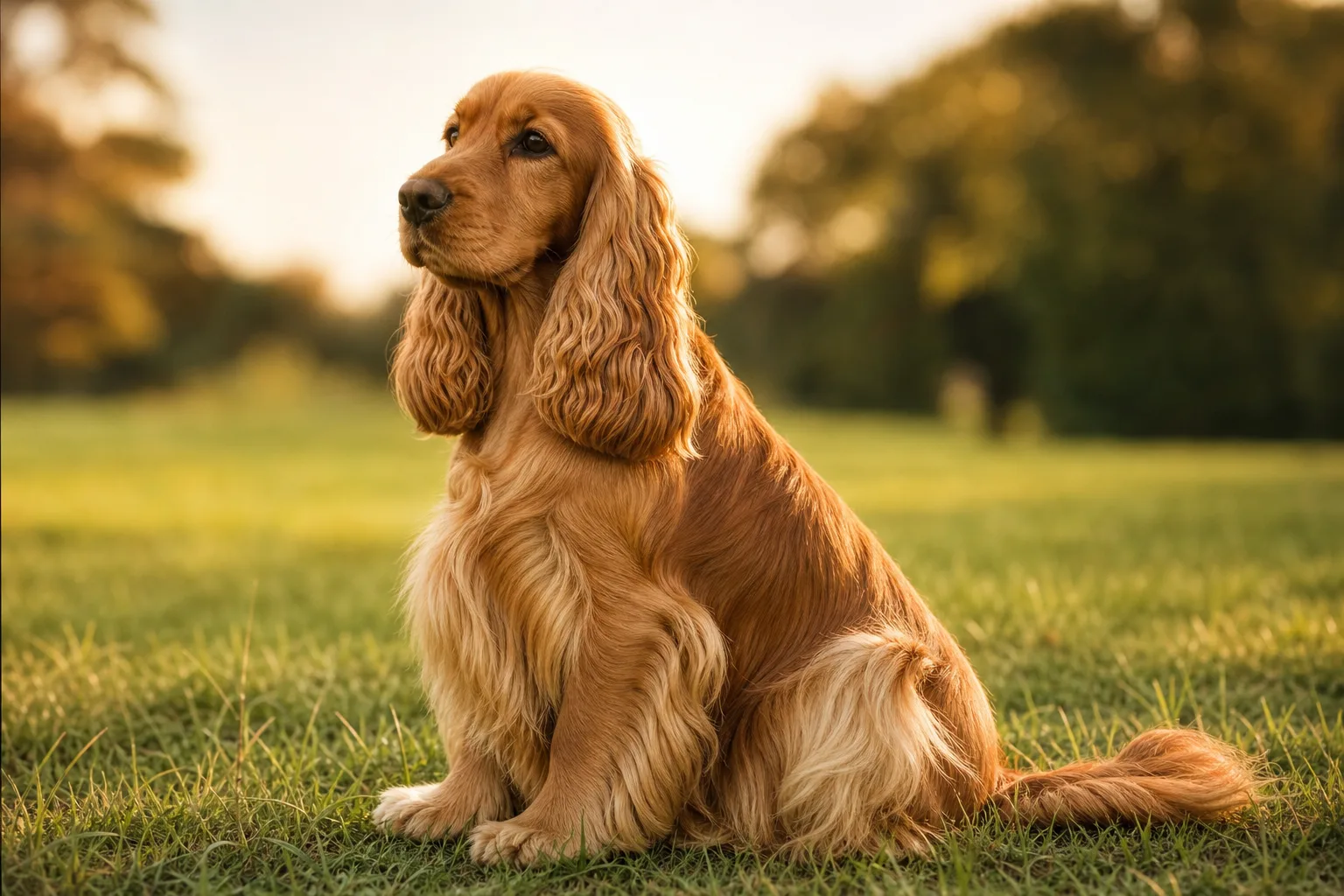
- Brush frequently to stop debris nesting in feathering. Short, strategic trims to prevent excessive soiling can be useful, but keep protective length around joints.
Practical bathing and seasonal management
Bathing should solve a problem (mud, heavy odour, skin needs), not be a routine chore. Practical tips:
- Use short rinses with dog-formulated shampoo and condition only where hair tangles (not on double-coat underlayers).
- Dry thoroughly — damp undercoats trap chill. A towel and brisk outdoor shake followed by towel-drying usually suffices for field dogs. If you use a dryer, use low heat and keep distance.
- Manage seasonal moult with increased brushing and a de-shedding session rather than shaving; shaving a double coat removes insulation and can damage coat recovery. For humane, practical seasonal guidance see /blog/Dealing with Seasonal Coat Changes Without Resorting to Shaving.
Realistic at-home limits and when to book a groom
Do-at-home care should focus on prevention and comfort. Book a professional groom when:
- Mats are tight against the skin or in sensitive areas.
- You need a tidy-up trim in sanitary zones, paws or feathering and are not confident doing it safely.
- Skin inflammation, persistent hotspots, severe hair loss or lumps are present — these need vet input before any clipping.
For practical, no-fuss maintenance appointments we recommend a short salon tidy such as a Bath and brush — quick, thorough and designed to return a working dog to service without unnecessary styling.
Handling mud, burrs and brambles without fuss
- Keep a small pair of blunt-ended scissors and a wide-tooth comb in your kit for removing burrs; only cut burrs that cannot be teased out with a comb and avoid cutting near skin.
- A conditioning spray can ease teasing out organic debris — choose products smartly and follow the manufacturer’s directions. See our guide on conditioning sprays and leave-ins for safe use: /blog/conditioning-sprays-and-leave-ins-when-and-how-to-use-them-safely.
- For heavy seasonal burring, a short strategic trim to feathering edges is often a better option than prolonged mat removal at home.
Local considerations and closing practicalities
In Barton Seagrave, Kettering and the surrounding countryside you’ll meet mud, hedgerows and foxtail-prone grass. Practical local additions:
- Rinse paws after rivers or long wet walks to reduce irritation from pollutants or seed heads.
- Increase checks for grass seeds in spring and early summer and remove them promptly.
- Keep a small first-aid kit for minor nicks; seek veterinary attention for anything deeper, persistent bleeding or if your dog is lame.
Conclusion
A working coat should be functional and easy to live with. Short, regular checks, the correct tools, seasonal de-shedding and sensible professional support keep your dog comfortable and job-ready. If you’re unsure about a skin change, a stubborn mat or any ear or paw problem, have a vet or an experienced groomer assess the dog — it’s quicker and kinder than guessing at home.
Related grooming guides
- Your puppy’s first groom: how to prepare and what to expect
- Bathing frequency: signs your dog needs a wash
Frequently asked questions
How often should I brush a working dog?
Daily quick checks with a five-minute brush of high-risk areas are ideal; a longer weekly session to remove loose hair and check skin prevents mats and keeps the coat serviceable.
Can I shave a double-coated working dog for summer?
No — shaving a double coat can harm insulation and sun protection. Use increased brushing and de-shedding in spring and keep shade and water available instead.
When should a vet be involved with coat or skin problems?
See a vet for persistent redness, swelling, lumps, extreme hair loss, ongoing scratching or wounds that won’t settle; these can indicate infection or other conditions needing treatment.
What should I do about burrs and brambles after a field run?
Comb and tease burrs out gently, use conditioning spray to loosen stubborn debris, and only cut away burrs you cannot remove safely—seek a groomer for dense matting.
Is hand-stripping necessary for working terriers?
Hand-stripping preserves wiry texture and function; for working terriers it’s often preferred to clipping. Consult a groomer experienced in hand-stripping rather than attempting it at home.