In this guide
Short answer: yes — short‑haired brachycephalic breeds need regular, breed‑aware coat care, but their needs are different from long‑haired or double‑coated dogs. Gentle daily routines, attention to facial folds and skin, and sensible bathing will keep your dog comfortable and looking their best.
Why short‑haired brachycephalic dogs are different
Brachycephalic breeds (Pugs, French Bulldogs, Bulldogs and similar flat‑faced types) often have short, single coats that lie close to the skin. That makes visible problems — irritation, mattes in facial folds, or greasy build‑up — easier to spot, but it also means:
- The coat gives limited protection against the weather, so skin needs protecting from sun and cold.
- Oil and dirt sit close to the skin, so light, regular cleaning is more useful than heavy-handed grooming.
- Skin folds and facial creases require specific, gentle attention to prevent soreness or infection — signs that need a vet or a qualified groomer.
These considerations shape safe, practical home care and the kind of professional visits you’ll want to plan.
Daily and weekly home care
A simple routine keeps short coats healthy and reduces the need for frequent salon visits.
- Brushing: 2–3 times a week with a soft bristle brush or rubber grooming mitt removes loose hair and distributes skin oils. See our guide to choosing brushes for short coats for tool recommendations. (/blog/choosing-the-right-brush-and-comb-for-your-dogs-coat)
- Check skin: look for redness, flaking, lumps or hotspots while you brush. Make notes and mention anything persistent to your groomer or vet.
- Facial folds: wipe folds daily with a soft, damp cloth, then dry completely. Use separate parts of the cloth for each fold to avoid spreading dirt. Never use cotton‑wool that leaves fibres behind.
- Eyes and nose: short‑faced dogs often have tear staining or nasal crusts. Wipe gently with a damp microfibre cloth. If you see thick discharge, blood, frequent squinting or offensive odour, book a vet appointment.
- Paws and pads: check for small cuts or trapped grit after walks; remove debris carefully and dry pads between toes after wet weather.
Keep sessions short and calm. Many brachy breeds are sensitive around the head and neck — praise and treats help build positive associations.
Bathing: how often and what to use
Short coats don’t need frequent bathing, but they do benefit from occasional washes that remove grease and odour without stripping natural oils.
- Frequency: most short‑haired brachycephalic dogs need a bath every 6–12 weeks, or sooner if they smell or get greasy. For personalised advice on signs that your dog needs a wash, consult our bathing frequency guide. (/blog/bathing-frequency-signs-your-dog-needs-a-wash)
- Shampoo choice: use a mild, pH‑balanced dog shampoo suitable for sensitive skin. Avoid human products and perfumed shampoos that can irritate delicate facial skin.
- Technique: use lukewarm water, keep water out of the ears and eyes, and rinse thoroughly. Pat dry with a towel and use a low‑heat dryer on a gentle setting only if your dog tolerates it — keep the dryer moving and at a safe distance.
- Aftercare: apply a light conditioning spray only if needed and recommended for your dog’s skin type; test on a small patch first. See our guidance on leave‑ins and conditioning sprays. (/blog/conditioning-sprays-and-leave-ins-when-and-how-to-use-them)
If bathing causes redness, intense scratching, or an unpleasant smell afterwards, stop and consult your vet.
Tools and safe handling at home
Short‑haired dogs need fewer tools than long coats, but the right kit makes life easier.
- Soft bristle brush or rubber mitt: for regular grooming and circulation.
- Fine‑tooth comb: to check for small mats around ears or tail base.
- Microfibre cloths: for facial folds and tear stains.
- Nail clippers or grinder: only if you are confident and comfortable — otherwise book a professional nail clip. (We offer nail‑clipping if you’d prefer a groomer.)
Use gentle, calm restraint — never force a dog into a position they clearly resist. If your dog becomes anxious, stop, give a break and try again later or seek a groomer experienced with nervous dogs. Our salon can help with training for salon visits and calm handling techniques. (/blog/safe-detangling-before-a-salon-visit-gentle-at-home-techniques-for-owners)
Seasonal care and environmental factors
Short coats change less with the seasons than double coats, but you should still watch for:
- Summer: sunburn is possible on pale or thin areas. Limit mid‑day exposure, use shade and consider a canine sunblock approved by your vet for small areas.
- Winter: short coats offer little insulation; provide a warm bed and consider a coat for cold walks if your dog shivers.
- Wet UK weather: dry folds and skin thoroughly after wet walks to prevent yeast or bacterial growth.
Adjust grooming and bathing frequency with the seasons — more frequent spot cleaning in muddy months, more careful drying in winter.
Professional grooming: what to expect and when to book
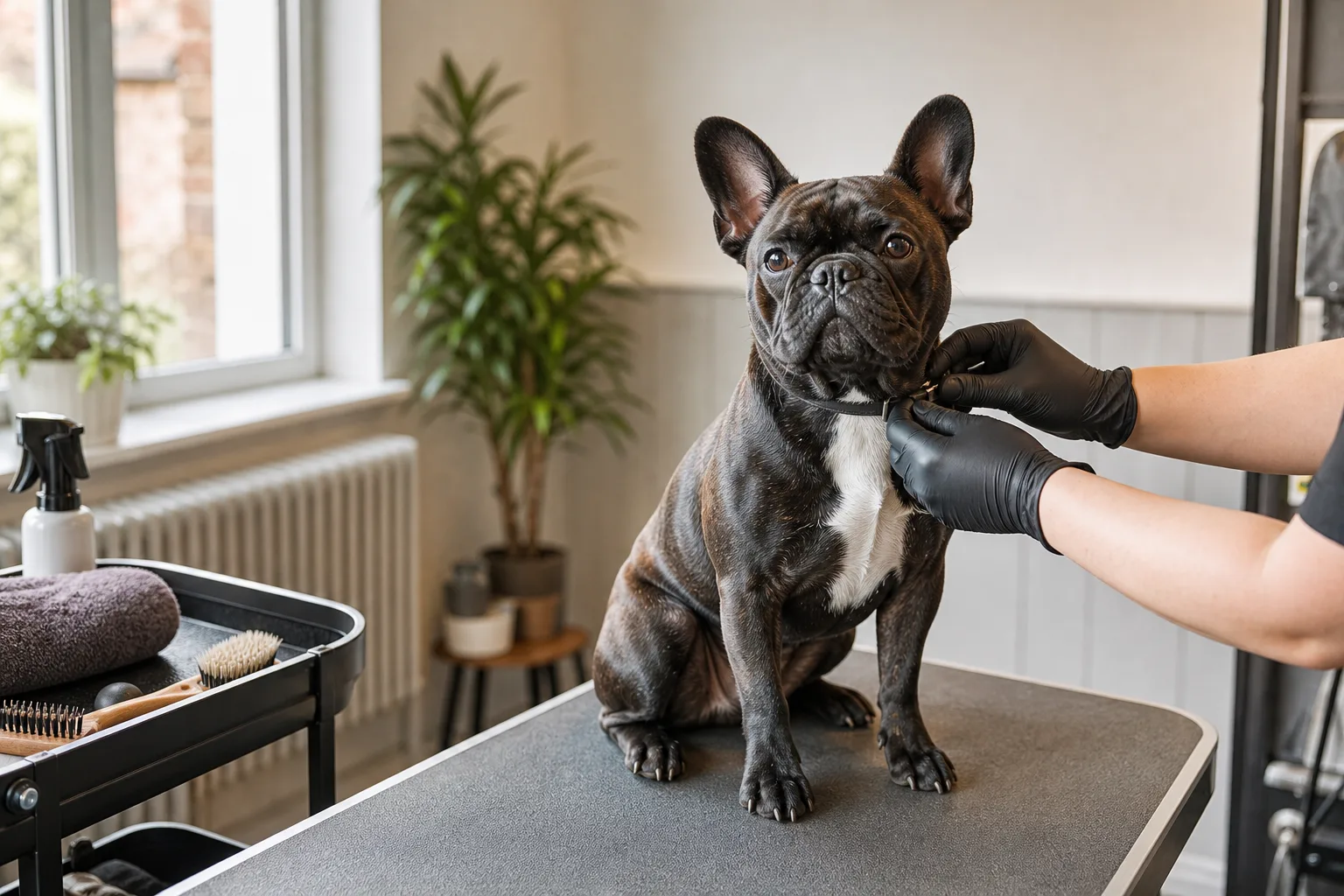
Short‑haired brachycephalic dogs benefit from light professional grooming: ear checks, nail trims, a tidy bath and fold checks. A typical salon visit might include:
- A calm welcome and brief health check (skin, ears, paws).
- Bath and gentle blow‑dry or towel‑dry if needed.
- Nail clipping and ear cleaning if required.
- Fold cleaning, finishing brush and a friendly behaviour check.
If you prefer a single, reassuring appointment for basic care, book a Bath and brush (/services/bath-and-brush) — it’s often the best starting point for short‑haired flat‑faced breeds. In Kettering and Barton Seagrave we see many brachy breeds; tell your groomer about any breathing difficulties or anxiety so they can plan a calm, one‑to‑one appointment.
When to see a vet or a qualified groomer
Short‑haired brachycephalic dogs can develop skin problems beneath their close coats or inside folds. Seek professional advice if you notice:
- Persistent redness, swelling, discharge, or an offensive smell from folds or ears.
- Sore, hairless patches or sudden, heavy flaking.
- Repeated eye infections, thick eye discharge, or frequent pawing at the face.
- A sudden change in grooming tolerance — reluctance to be touched where they normally accept it.
A vet should assess signs of infection, allergy or pain. A qualified groomer should handle delicate tasks like de‑mating around the face, ear care and anxious handling; never use scissors or heavy clippers around the eyes, nose or deep folds at home.
Practical tips for owners in Kettering
- Build short, calm handling sessions in the house so visits to the salon are less stressful — see our puppy first groom guide if your dog is young. (/blog/puppy-first-groom)
- Keep grooming supplies in a small kit you take out after muddy walks: microfibre cloth, brush, treats and a spare towel.
- If your brachycephalic dog is nervous, ask for a one‑to‑one appointment or a groomer experienced with nervous dogs. (/services/nervous-dog-grooming)
Conclusion
Short‑haired brachycephalic breeds need thoughtful, gentle care rather than heavy grooming. Regular brushing, careful fold cleaning, sensible bathing and timely professional checks will keep your dog comfortable and reduce the chance of skin problems. If in doubt — especially where folds, eyes or ears look sore or smell bad — consult your vet or a qualified groomer who knows brachycephalic needs. In Kettering, a calm, one‑to‑one approach makes the difference for these breeds.
Related grooming guides
- Your puppy’s first groom: how to prepare and what to expect
- Bathing frequency: signs your dog needs a wash
Frequently asked questions
How often should I brush a short‑haired brachycephalic dog?
Brush 2–3 times a week with a soft bristle brush or rubber mitt to remove loose hair and distribute oils. Daily quick checks of facial folds are also recommended.
Can I use human shampoo on my brachycephalic dog?
No — use a mild, pH‑balanced dog shampoo for sensitive skin. Human shampoos can strip oils and irritate the skin; stop use and seek vet advice if irritation appears.
How do I clean my dog’s facial folds safely?
Wipe folds with a soft, damp microfibre cloth, then dry thoroughly. Do this daily, use fresh cloth areas for each fold and see a vet if you notice redness, bad smell or discharge.
Is it safe to shave a short‑haired brachycephalic dog to keep them cool?
Generally no — short coats help regulate skin health and shaving can expose skin to sunburn and irritation. Discuss seasonal comfort options with a groomer or vet instead.
When should I book a professional groomer?
Book a groomer for routine nail clips, ear checks, a bath and fold inspections, or anytime you’re unsure how to remove debris safely. If your dog is anxious, request a one‑to‑one appointment with an experienced groomer.