Short answer and introduction
No — in almost every case you can manage seasonal coat changes without shaving. With the right brushing routine, occasional baths, attention to diet and sensible environmental adjustments, most dogs will moult and regrow normally while staying comfortable. Shaving removes the coat’s natural protection and is rarely necessary except on veterinary advice or in specific grooming situations handled by a professional.
Why seasonal changes happen (briefly)
Dogs moult in response to changes in daylight, hormones and sometimes temperature. Double-coated breeds (for example, many spitz and working breeds) shed their undercoat heavily in spring and autumn. Single-coated and long-haired breeds have different patterns, and some dogs shed steadily year-round. Knowing your dog’s coat type helps you choose the right tools and the right rhythm of care.
How shaving can cause problems
- Shaving double-coated dogs often removes insulating undercoat that helps regulate temperature; regrowth can be patchy and sometimes changes texture.
- Bare skin is more vulnerable to sunburn, insect bites and abrasions.
- Shaving may make mats and skin problems harder to spot and manage.
Because of these risks, reserve whole-body shaving for cases where a vet or experienced groomer has recommended it — never attempt extensive clipping at home on a dog you’re not trained to handle.
Practical, humane steps to manage seasonal moulting
- Set a brushing plan that suits the coat
- Short, smooth coats: a rubber curry mitt or bristle brush used once or twice weekly removes loose hair and spreads natural oils. See Choosing the Right Brush and Comb for Your Dog’s Coat for tool guidance. (/blog/choosing-the-right-brush-and-comb-for-your-dogs-coat)
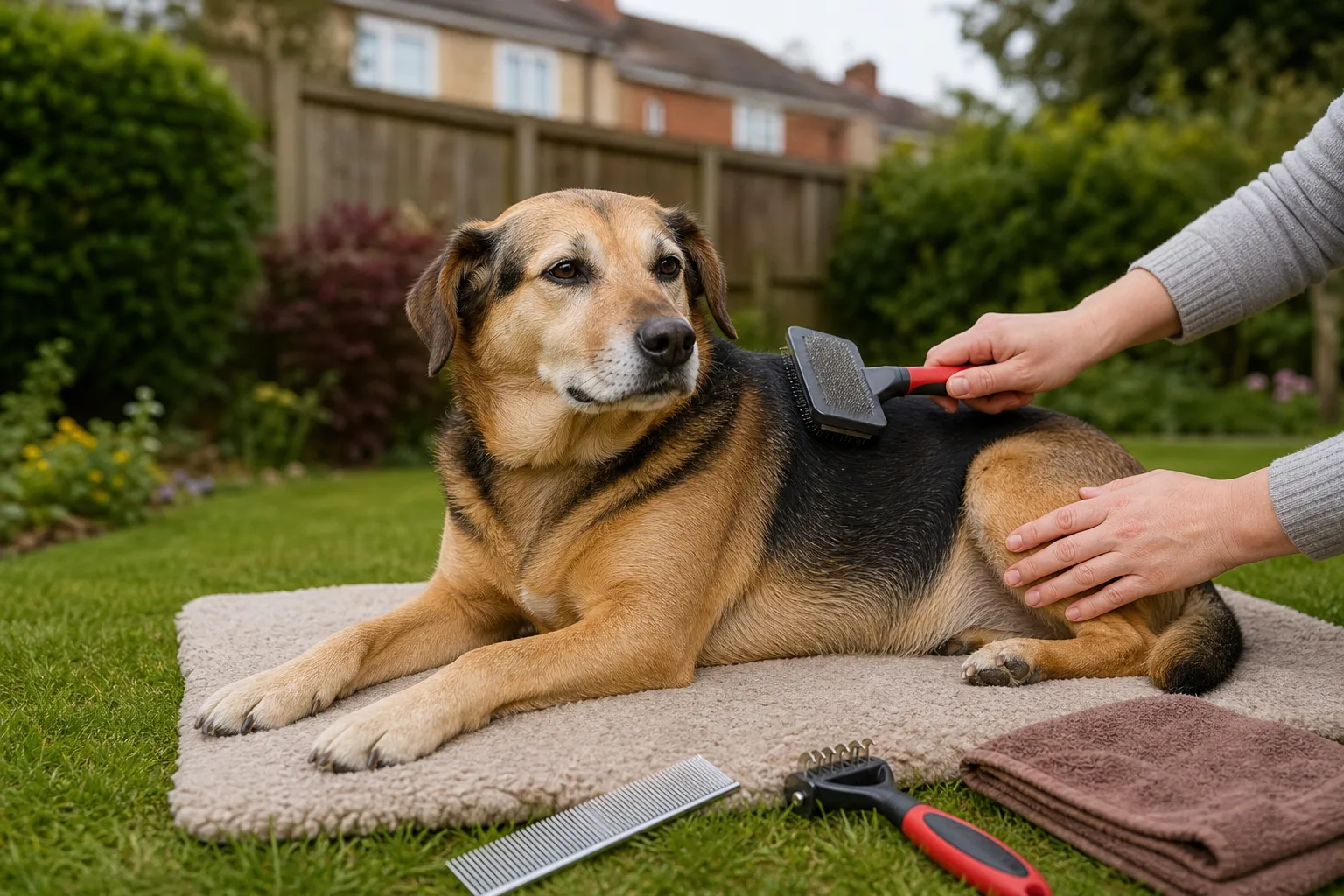
- Double coats: daily to every-other-day brushing during peak moult. Use an undercoat rake or de-shedding tool in short sessions to remove loose underfur, then finish with a slicker or comb. Be gentle — the aim is to remove loose hair, not to abrade the skin. See Everyday brushing routines for different coat types for step-by-step timings and techniques. (/blog/everyday-brushing-routines-for-different-coat-types)
- Long, curly and wiry coats: brush more regularly to prevent tangles; hand-stripping or specialist trimming is best left to a groomer for many wiry coats.
Short-session routine
- Work in 5–10 minute sessions to keep the dog calm and willing.
- Start at the head and work back, following hair growth and checking skin as you go.
- Reward with a short walk or a favourite treat to build a positive routine (see our tips in Your puppy’s first groom: a calm beginning for building confidence if your dog finds grooming stressful). (/blog/puppy-first-groom)
- Use bathing wisely — not too often, but effectively
- Baths help loosen dead undercoat when used with a properly formulated, dog-safe shampoo and thorough drying. Don’t over-bathe; excessive washing strips natural oils and can worsen drying and flaking. Our guide to Bathing frequency explains signs your dog needs a wash and how often different coats tolerate it. (/blog/bathing-frequency-signs-your-dog-needs-a-wash)
- After a bath, a cool or warm blow-dry on a low setting helps lift the undercoat so you can brush it out; many owners find this is best done at a salon if their dog is nervous of dryers.
- Adopt de-shedding sessions, not drastic cuts
- A professional deshed (hand-stripping where appropriate, or careful undercoat removal) is a gentle, breed-appropriate alternative to shaving. For heavily shedding dogs, a salon appointment timed for spring and autumn can reduce loose hair in the home and help your dog stay comfortable. If you do use a de-shedding tool at home, follow the tool guidance in Coat-care tools every owner should own — what they do and how to use them safely. (/blog/coat-care-tools-every-owner-should-own-what-they-do-and-how-to-use-them-safely)
- Never pull or yank hair; that causes pain and can damage follicles.
- Watch diet and general health
- A shiny, healthy coat is supported by a balanced diet, hydration and parasite control. Small improvements in nutrition often show in coat condition within weeks, but consult your vet before changing diet or adding supplements.
- Read How Diet and Grooming Work Together to Support a Healthy Coat for practical, non-clinical tips on feeding and coat care. (/blog/how-diet-and-grooming-work-together-to-support-a-healthy-coat)
- Manage mats and tangles safely
- Mats trap dead hair against the skin and can become painful; keep long and curly coats regularly maintained to avoid matting.
- Use gentle detangling techniques at home (see Safe detangling before a salon visit) and seek a professional groomer for large, tight mats rather than trying to cut them out yourself. (/blog/safe-detangling-before-a-salon-visit-gentle-at-home-techniques-for-owners)
- Environmental and comfort measures
- Provide cool, shaded areas and plenty of fresh water on warm days; raised beds and cool tiles help doubly-coated dogs stay comfortable.
- Shorten walks at the hottest times of day and avoid leaving dogs in cars or poorly ventilated rooms.
- Regular vacuuming and a lint roller help keep the house tidy while you manage moulting.
When to see a vet or a qualified groomer
See a vet promptly if you notice:
- Sudden, severe hair loss, bald patches or reddened skin.
- Intense itching, sores, scabs, or pus — signs that a skin infection or parasitic problem may be present.
- Rapid weight loss, lethargy or other changes in general health alongside coat changes.
See a qualified groomer if:
- Your dog has extensive, tight mats or tangles that you can’t manage safely at home.
- You need breed-specific hand-stripping (wiry coats) or a professional de-shed appointment.
- You want advice tailored to your dog’s coat type and lifestyle — experienced groomers in Kettering and Barton Seagrave will advise on timing and technique without resorting to full shaving.
What to avoid at home
- Don’t shave double-coated dogs as a routine response to moulting — it often causes more problems than it solves.
- Don’t attempt complex clipping or scissoring unless you are trained; incorrectly used tools risk injury and uneven regrowth.
- Avoid shampoos or products with harsh ingredients on sensitive coats — see Products to avoid on sensitive coats for common culprits and safer choices. (/blog/products-to-avoid-on-sensitive-coats-ingredients-and-items-that-commonly-cause)
A realistic seasonal schedule for Kettering owners
- Early spring: begin more frequent brushing as undercoat loosens; consider a professional deshed appointment mid-spring.
- Late spring and summer: maintain regular brushing, reduce bathing to when needed, and prioritise cooling and shade during heatwaves common in lowland Northamptonshire.
- Autumn: a second moult may require more brushing; check ears, paws and undercarriage for debris and remove gently.
Conclusion
Seasonal coat changes are normal and usually best handled with increased care rather than shaving. A short, consistent brushing routine, occasional targeted baths, attention to diet and timely professional help will keep your dog comfortable and their coat healthy. When in doubt — especially with sudden hair loss, skin damage or severe matting — see your vet or a qualified groomer who can assess the situation safely and humanely. If you’d like step-by-step tool advice, start with Choosing the Right Brush and Comb and our Coat-care tools article to match equipment to your dog’s needs. (/blog/choosing-the-right-brush-and-comb-for-your-dogs-coat) (/blog/coat-care-tools-every-owner-should-own-what-they-do-and-how-to-use-them-safely)
Related grooming guides
Frequently asked questions
Is it ever OK to shave my dog for the summer?
Generally no for double-coated breeds — shaving often removes insulating undercoat and can disrupt temperature regulation and regrowth. Only consider shaving on veterinary advice or when a professional groomer recommends it for a specific medical or safety reason.
How often should I brush my dog during heavy moult?
It depends on coat type: double coats usually benefit from daily or every‑other‑day brushing during peak moult; short coats may need weekly sessions. Keep sessions short and calm to avoid stress.
Can bathing reduce shedding?
Yes — a bath with a suitable dog shampoo can loosen dead undercoat so you can brush it out, but avoid over-bathing. Dry and brush thoroughly afterwards; consider a professional dry and brush for anxious dogs.
What should I do about painful mats?
Do not try to cut out tight mats yourself. Use gentle detangling for small tangles, but seek a professional groomer for large, tight mats to avoid causing pain or skin injury.
When should I consult my vet about coat changes?
Consult your vet if you see sudden bald patches, severe itching, sores, scaly skin, or a rapid change in your dog’s overall health — these can be signs of underlying medical issues.