In this guide
A puppy’s first groom should be short, calm and positive. The goal isn’t a perfect haircut: it’s to show your puppy that being bathed, dried, brushed and handled is safe and even enjoyable. A little practice at home beforehand, a quiet one-to-one salon and a sensible routine afterwards make all the difference.
When should a puppy have their first groom?
Many owners book a first visit once their vet confirms the puppy is ready to go out and meet new places, usually after the vaccination course is complete. Booking early has a big advantage: your puppy gets used to grooming while everything is new and interesting, long before their adult coat needs serious work.
This matters most for breeds with coats that keep growing, such as poodles, cockapoos, cavapoos, doodles, shih tzus and bichons. These dogs will need professional grooming every few weeks for life, so a good start pays off for years. If you have a cockapoo or another poodle cross, an early introduction also helps when the puppy coat changes to the adult coat, which is when matting often starts.
Getting your puppy ready at home
Short, regular handling sessions are the best preparation you can give. Aim for a minute or two at a time, a few times a day, and always finish while your puppy is still relaxed.
- Paws: hold each paw gently for a second or two, then reward. Build up to touching between the toes and pressing lightly on each nail.
- Ears and face: lift the ear flaps, touch around the muzzle and gently hold the chin. Groomers need to work around the eyes and face, so this is worth practising.
- Tail and back legs: many puppies are sensitive here. Go slowly and reward calm behaviour.
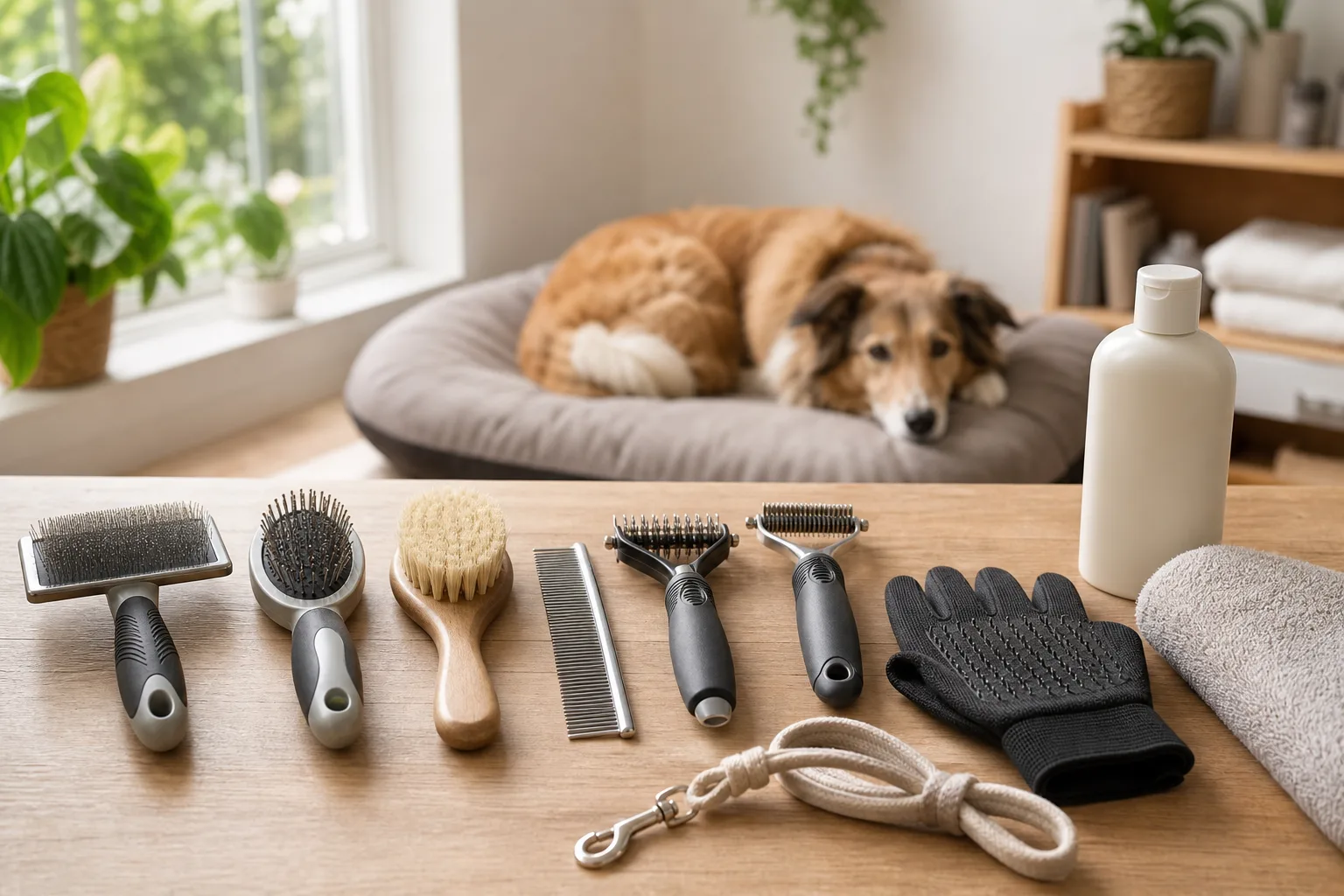
- Brushing: introduce a soft brush for a few strokes at a time. Our guide to choosing the right brush and comb explains which tools suit which coats.
- Sounds: a hairdryer on a low setting, held at a distance while your puppy has a chew or a treat, helps them get used to the noise of drying.
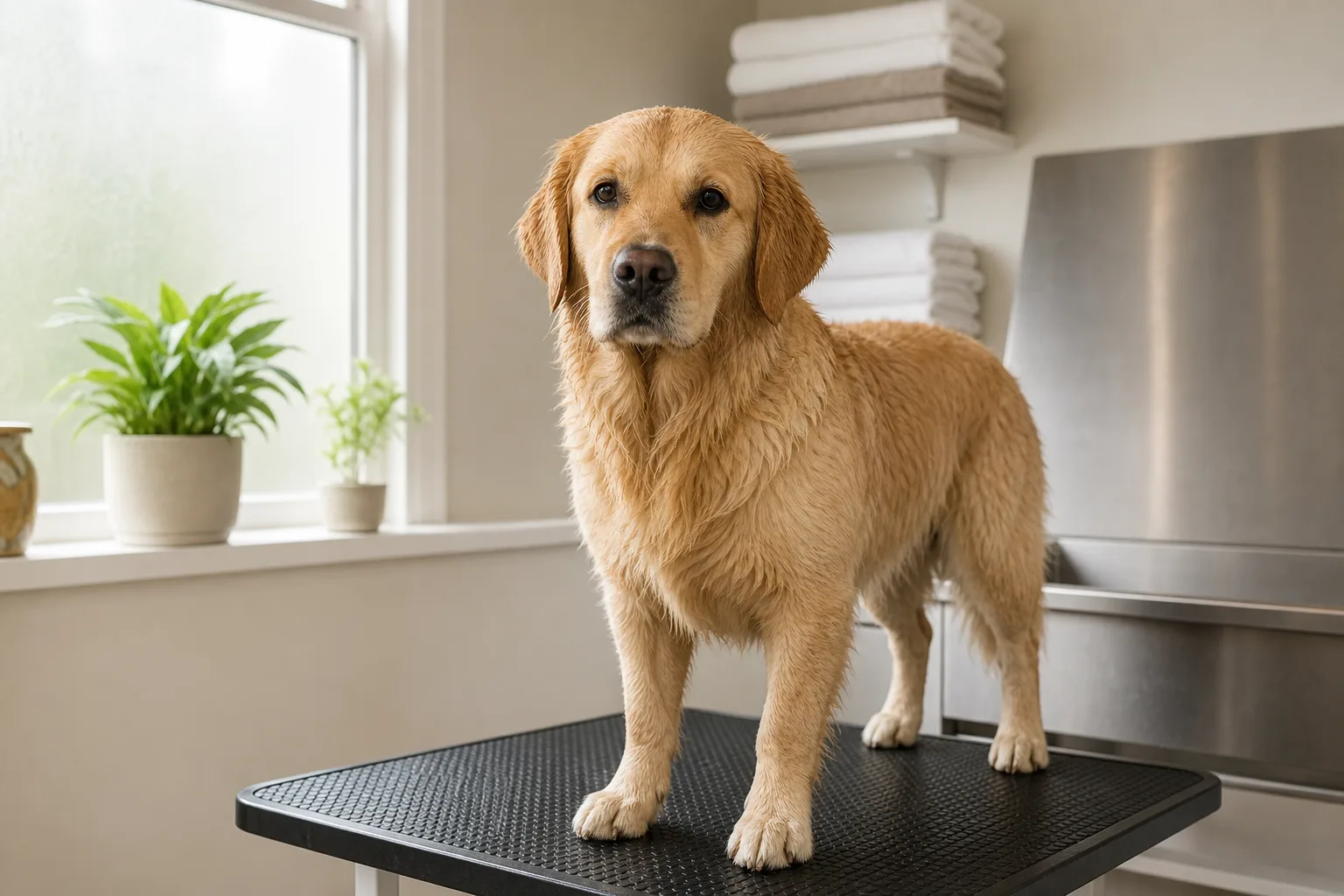
- Standing still: practise standing your puppy on a stable, non-slip raised surface for a few seconds, with a hand under the tummy for support.
Treats and praise should follow every small success. If your puppy wriggles, yawns, licks their lips or turns away, that’s a sign to make the next session shorter and easier.
What happens at a puppy groom
At Zen Dog Grooming there is only ever one dog in the salon, so your puppy meets the experience without other dogs barking or dryers running in the background. A puppy grooming session typically includes:
- A few minutes to settle in and sniff around.
- A warm bath with a gentle shampoo.
- A towel dry and a calm introduction to the dryer, at your puppy’s pace.
- A brush and comb through the coat.
- A paw tidy and nail trim.
- A face and hygiene tidy, if your puppy is comfortable.
We keep puppy sessions shorter than adult grooms and finish while the experience is still a happy one. If your puppy needs a break, they get one.
On the day
A few simple steps help the appointment go smoothly:
- Give your puppy a chance to go to the toilet before you arrive.
- Avoid a very large meal right before the groom.
- Tell us about any health conditions, allergies or worries when you drop off.
- Keep your goodbye short and matter-of-fact. Puppies pick up on our mood, and a calm handover helps them settle.
After the groom
Your puppy may be tired afterwards, which is completely normal after a new experience. Give them a quiet evening and plenty of praise. If there was anything they found tricky, such as feet or the dryer, we’ll let you know so you can practise that at home before the next visit.
Building a routine
Puppies learn through repetition. Regular, short visits teach them what to expect, so that by the time they need a full groom, it feels familiar rather than frightening. Every few weeks is common while they are learning, and we’ll suggest a routine that suits your puppy’s breed and coat. Our guide to how often different dog coats should be groomed is a useful starting point.
Between visits, keep up the short brushing and handling sessions. Our everyday brushing routines for different coat types cover what to do for each coat.
If your puppy is nervous
Some puppies are naturally more cautious. That’s fine. A quiet salon, a patient groomer and shorter sessions help most nervous puppies grow in confidence. If your puppy is very worried about handling, tell us when you book: we can plan a shorter first visit, and our approach to grooming nervous dogs applies to puppies too.
Frequently asked questions
How old should a puppy be for their first groom?
Many owners book once their vet confirms the vaccination course is complete. Starting early helps your puppy get used to grooming before the adult coat grows in.
Will my puppy get a full haircut at their first groom?
Usually not. The first visit is an introduction: a bath, dry, brush, nails and a tidy of the face, feet and hygiene areas if your puppy is relaxed.
How long does a puppy groom take?
Puppy sessions are kept shorter than adult grooms, so your puppy finishes while the experience is still positive.
Can I stay with my puppy during the groom?
Many puppies settle better when their owner isn’t in the room, but every puppy is different. Talk to us when you book and we’ll suggest what is best for yours.
How can I tell if my puppy is stressed during grooming at home?
Yawning, lip licking, turning away, freezing or trying to move away are common signs. Stop, give your puppy a break and make the next session shorter and easier.