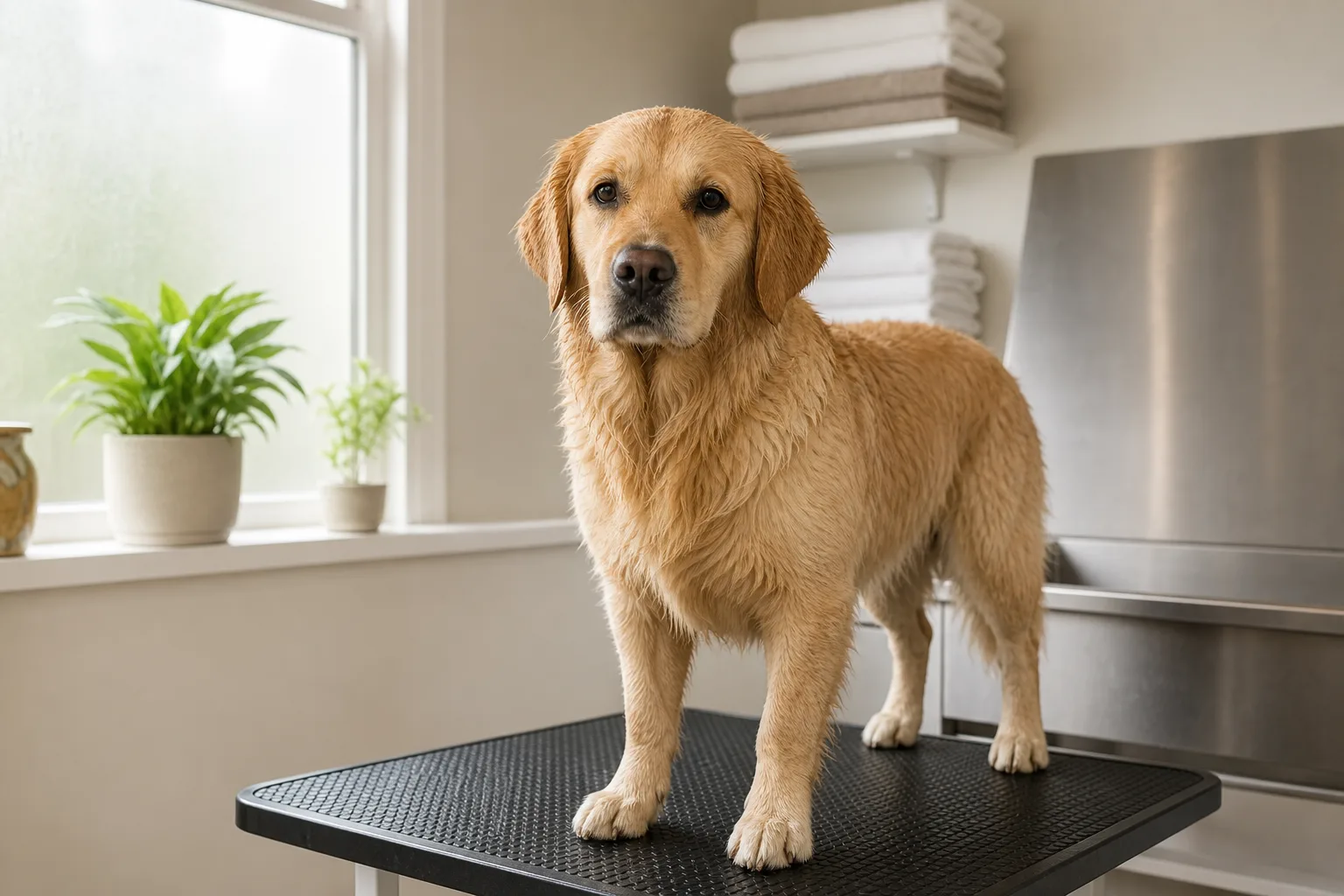
Short answer: bathe only when clear signs indicate your dog needs it — not on a fixed schedule. Typical triggers are an odour that brushing won't remove, visible dirt or sticky residues, excessive greasiness, matting that can’t be handled with brushing, or after specific messy events (mud, rolled-in debris). Over-bathing can strip natural oils and irritate skin, so look for these practical, non-medical cues before you reach for the shampoo.
Why frequency depends on the dog, not the calendar
Every dog is different. Coat type, outdoor lifestyle, activity level and skin sensitivity all affect how often a dog benefits from a wash. Short-coated, low-maintenance breeds generally need fewer baths than long, dense or curly coats that trap dirt and odours. Instead of a blanket rule, use visible and tactile signs to decide.
If you’re preparing a new routine for a puppy, see our guidance on starting grooming gently in /blog/puppy-first-groom.
Clear signs your dog needs a wash
Use these straightforward, non-medical indicators to decide whether a bath is needed:
- Smell that won’t brush out: if coat brushing and spot-cleaning fail to remove a persistent ‘doggy’ or sour odour, a bath is a good next step.
- Sticky or greasy coat: a shiny, greasy or sticky feel often means surface oils, road grime or food residue — brushing alone won’t fix this.
- Visible dirt, stains or sticky mess: mud, mud-splattered paws, tar, or anything that clings and can’t be lifted with a wipe.
- Discoloured coat patches: brown or yellow staining, particularly on light-coloured fur (often around face, chest or paws) where topical dirt accumulates.
- Excessive dander or flaky skin without itch: if you see lots of loose flakes that brushing doesn’t remove, a gentle medicated or moisturising wash may help — but always check with a vet if flakes are severe or accompanied by redness or licking.
- After-activity clean-up: swimming in stagnant water, a seaside dip, or rolling in another animal’s scent are good reasons to bathe.
- Localised smearing or discharge: if your dog has a soiled area (e.g. around the rear, paws or beard) that’s uncomfortable or unhygienic, a targeted wash is appropriate.
When these signs appear, choose an appropriate product and method rather than automatically increasing bath frequency.
Coat-type considerations — tailor the wash to the fur
- Short coats (e.g. staffies, beagles): typically need the fewest full baths. Spot-cleaning and regular brushing keep skin oils balanced.
- Double coats (e.g. collies, huskies): avoid frequent baths because they can strip undercoat oils. Thorough drying and regular de-shedding brushing are more important; bathe when dirt or smell persists. See seasonal notes in /blog/how-often-should-different-dog-coats-be-groomed.
- Long or silky coats (e.g. spaniels, Afghan types): more prone to tangles and matting; wash when coat becomes limp, greasy or smelly. Regular conditioning and brushing between washes help prevent mats.
- Curly or woolly coats (e.g. poodles, Bichon): these can feel dry but trap soils — use moisturising shampoos and professional clipping when necessary. Short, frequent grooming visits are better than frequent home bathing.
- Wiry coats (e.g. terriers): generally low-odour but can carry debris. Hand-stripping and correct brushing reduce the need for frequent bathing. For tool choices, see /blog/choosing-the-right-brush-and-comb-for-your-dogs-coat.
How to decide between spot-clean, bath or pro groom
Ask yourself these quick questions:
- Is the issue localised (paws, face, rear) or whole-body? Localised: try a damp cloth or pet wipe first.
- Can brushing remove the debris or smell? If yes, brush and reassess.
- Is the coat matted or stuck together? Matted areas should be assessed by a professional groomer — baths can tighten mats and make them harder to remove.
- Is there skin redness, open sores, severe scratching or unusual discharge? Stop and seek veterinary advice before bathing.
If the problem is whole-body and persistent despite brushing, a bath with a suitable shampoo is sensible. If you’re unsure or the coat requires clipping or mat removal, book a session with a qualified groomer rather than attempting complex work at home.
Practical bathing tips for owners in Kettering and Barton Seagrave
- Prepare: gather a towel, dog‑safe shampoo (pH-balanced), a non-slip mat, and a brush. Use lukewarm water.
- Brush first: remove loose hairs and surface tangles to make washing more effective and reduce mats tightening.
- Use small amounts: a little shampoo goes a long way; avoid over-sudsing. Concentrate on dirty areas rather than the whole body if appropriate.
- Rinse thoroughly: residue can irritate skin. Rinse until water runs clear.
- Drying: towel dry first, then air-dry or use a groomer’s warm dryer if available. Keep your dog warm until fully dry, especially in cooler months around Kettering.
- Frequency: once every 4–8 weeks is common for many dogs that get moderately dirty; however, rely on the signs above rather than the calendar.
Important: never use human shampoos, essential oils or unvetted products on dogs. If you’re uncertain which product suits your dog’s coat or skin, consult a qualified groomer or your vet.
When to ask a groomer or vet to assess the dog
- Groomer: substantial matting, complex coat types (curly, long, double coats), or when professional tools (clippers, hand-stripping) are required. A groomer can also advise on a sensible washing schedule for your dog’s coat type and lifestyle.
- Vet: persistent skin redness, sores, hair loss, intense scratching, or sudden, strong odours that brushing and bathing don’t fix. These signs can indicate a medical issue requiring veterinary diagnosis and treatment.
For help building a long-term at-home routine — including how brushing complements bathing — see /blog/everyday-brushing-routines-for-different-coat-types.
Travel, weather and seasonal notes for UK owners
- Winter: dogs may get muddy more often but drying times are longer; avoid bathing too frequently to preserve skin oils. Towel and spot-clean where possible.
- Spring shedding: double-coated dogs shed more; a thorough brush and occasional bath during or after de-shedding helps remove loose undercoat and reduces house hair.
- Summer: paddles and seaside dips may require rinsing, but saltwater and pool chlorine can dry skin — rinse with fresh water after swims and use a gentle moisturising shampoo if necessary.
When winter walks in Kettering leave paws salt-stained or crusted with road grit, a quick wash and a barrier balm (vet-approved) can help — but avoid full-body bathing unless indicated.
Common mistakes to avoid
- Over-bathing: frequent washing can dry skin and cause itchiness or flaking.
- Using the wrong product: human or harsh detergents can unbalance canine skin pH.
- Ignoring mats: bathing a matted dog may tighten mats and cause pain; see a groomer first.
- Improper drying: leaving a dense coat damp for long increases skin infection risk; dry thoroughly.
Conclusion
Bathing should be driven by need, not habit. Look for clear, non-medical signs — persistent odour, greasiness, visible dirt, or post-activity contamination — and tailor your approach to coat type. Regular brushing, spot-cleaning and professional assessments for matting or skin concerns will keep your dog comfortable and reduce unnecessary washes. If in doubt about skin or coat issues, ask a qualified groomer or your vet to assess the dog before changing routines.
Related grooming guides
Frequently asked questions
How often should I bathe my short-coated dog?
Short-coated dogs often need fewer full baths — typically every 6–12 weeks depending on activity and smell. Use brushing and spot-cleaning between washes; bathe sooner if persistent odour, greasy coat or sticky mess appears.
Will frequent baths damage my dog’s skin?
Yes, too-frequent bathing can strip natural oils and cause dryness or irritation. Stick to baths only when signs show a need and use a dog-formulated, pH-balanced shampoo. Consult a vet if skin becomes flaky or red.
My dog rolled in something smelly — should I bathe now?
If brushing and a damp wipe don’t remove the smell, a bath is appropriate. Use a gentle shampoo and rinse well. Seek vet advice if the smell is chemical or if your dog shows discomfort.
Can I wash a matted coat at home?
No — bathing a matted coat can make tangles tighter and painful. Ask a qualified groomer to assess and remove mats safely before bathing.
What should I do if my dog has flaky skin but isn’t itchy?
Light flaking can sometimes benefit from a moisturising dog shampoo and less frequent washing. If flakes are heavy, persistent or come with other signs, consult your vet to rule out underlying causes.