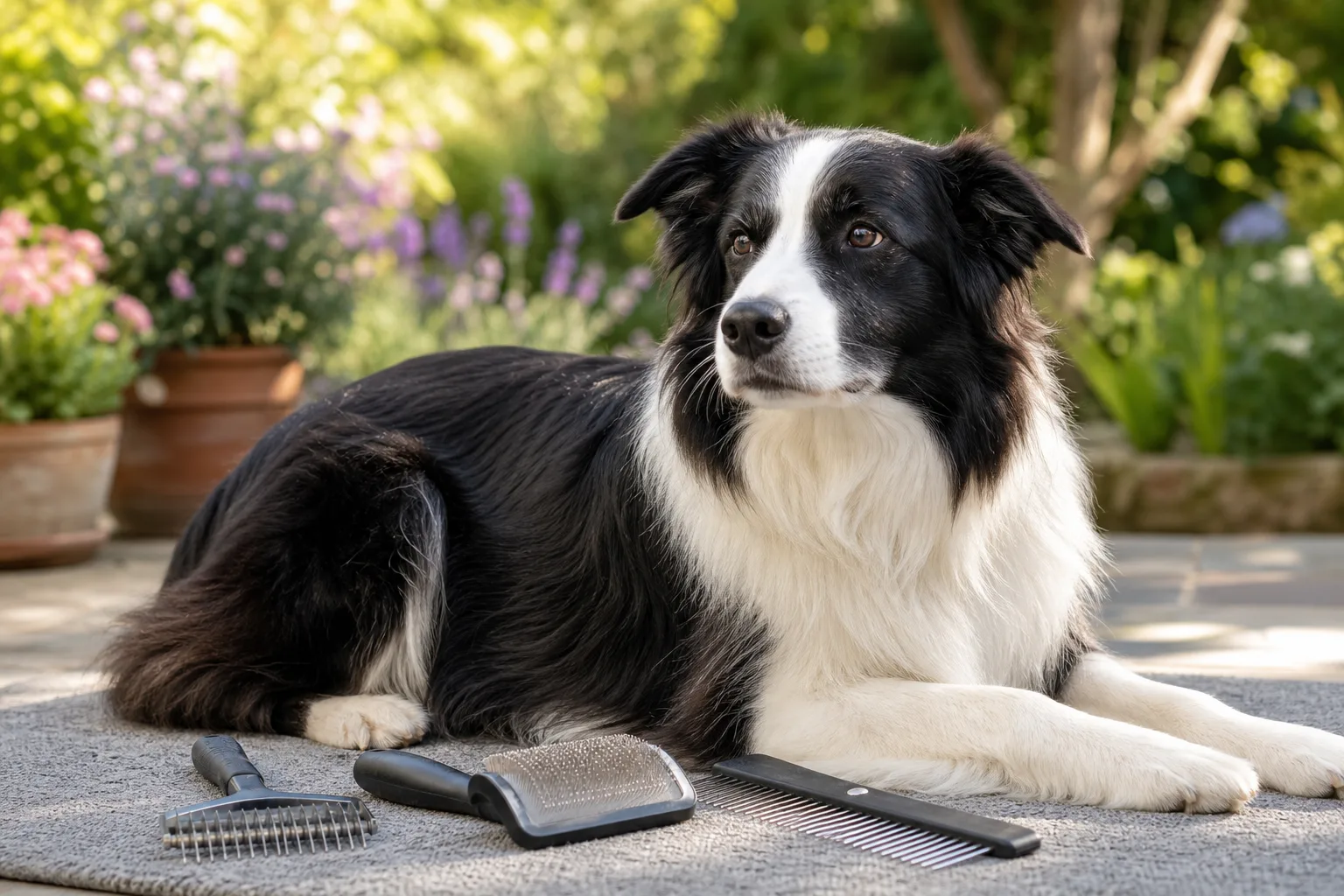
Double-coated dogs have two distinct layers — a dense insulating undercoat and longer, protective guard hairs — and they need regular, respectful maintenance rather than being shaved. This article explains how the double coat works and gives clear, practical routines you can use at home and when to seek professional help.
How a double coat is structured
A double coat contains:
- Undercoat: a soft, downy layer close to the skin that insulates against cold and heat, and helps wick moisture. It tends to be denser in cooler months and thicker in certain breeds.
- Guard hairs (topcoat): longer, coarser hairs that protect the skin from dirt, sunlight and light rain. They give the dog its visible silhouette and texture.
Because both layers perform different jobs, care that removes one layer (for example shaving the guard hairs) can harm a dog's natural temperature regulation and defence against the elements. In the UK climate — with wet winters and warm summers in Kettering — preserving both layers is usually the best approach.
Everyday maintenance: simple, consistent routines
A gentle, regular routine keeps a double coat healthy and comfortable. Aim for a schedule you can keep up long‑term rather than occasional intense sessions.
Daily or every other day (short‑to‑medium coated breeds):
- Brush briskly with a de‑shedding tool or slicker to remove loose undercoat and surface debris. Quick, calm sessions (5–10 minutes) help reduce matting and hair in the house. See our guide to everyday routines for different coat types for step‑by‑step timings and tool choices: /blog/everyday-brushing-routines-for-different-coat-types.
Two or three times a week (thicker or long double coats):
- Use an undercoat rake or dematting comb gently to reach the undercoat without pulling the skin. Work in sections, and be patient around the chest, behind the ears and the tail base — these places mat most easily.
- Then follow with a slicker or bristle brush to smooth the guard hairs and check the skin.
Quick checks every walk:
- Run your hands over the coat for lumps, damp spots, ticks or unpleasant odours. Regular touching helps the dog accept handling and lets you spot issues early.
If you’re unsure which tools suit your dog, read: /blog/choosing-the-right-brush-and-comb-for-your-dogs-coat and /blog/coat-care-tools-every-owner-should-own-what-they-do-and-how-to-use-them-safely for clear, UK‑focused recommendations.
Seasonal moulting: manage, don’t shave
Many double‑coated breeds moult heavily twice a year (spring and autumn), shedding old undercoat to adjust to seasonal temperature changes. In the UK this can be prolonged or triggered by sudden warm spells. Practical steps:
- Increase brushing frequency during moulting — short, daily sessions are kinder than one long session.
- Use an appropriate de‑shedding tool and work from the skin outwards, supporting the coat rather than yanking at it.
- Encourage a cool, shaded resting place in summer and avoid leaving dogs in hot cars or hot rooms.
Shaving is rarely necessary and can damage the coat’s ability to regulate temperature and protect skin. For humane management of heavy shedding, see our guidance on seasonal changes without resorting to shaving: /blog/dealing-with-seasonal-coat-changes-without-resorting-to-shaving.
If your dog starts to lose large clumps of guard hairs, develops skin lesions, intense itchiness or patches of hair loss, arrange a vet assessment — these signs may indicate skin disease, parasites or hormonal problems rather than normal moulting.
Bathing and products: keep it gentle
Bathing has a role, but it should be thoughtful:
- Bathe only when the coat is dirty, smelly, or during moulting if a bath helps loosen dead undercoat; over‑bathing strips natural oils. For guidance on frequency and signs your dog needs a wash, see: /blog/bathing-frequency-signs-your-dog-needs-a-wash.
- Use a mild, dog‑formulated shampoo and consider a lightweight conditioner or leave‑in to keep guard hairs soft. If your dog has sensitive skin or a known condition, follow your vet’s recommendations.
- Thoroughly dry the coat after bathing. Moisture trapped in the undercoat can encourage irritation and smell. For longer double coats, dry with a towel and, if comfortable and safe, a low‑heat hairdryer used at a distance. If your dog is anxious or you don’t have the kit, a professional groomer can dry safely.
Avoid home use of human products, harsh detergents, or excessive perfume. Our article on conditioning sprays and leave‑ins explains when these products help and how to apply them safely: /blog/conditioning-sprays-and-leave-ins-when-and-how-to-use-them.
Tools and safe technique
The correct tool and careful technique matter more than intensity:
- Undercoat rake or de‑shedding tool: for removing loose undercoat. Use slowly, supporting the skin with your free hand.
- Slicker brush: to tidy guard hairs and work out small tangles.
- Wide‑tooth comb: to check the coat after brushing and find mats.
- Dematting tool: only use gently and discard mats into smaller pieces rather than cutting across the skin. If a mat is near the skin and cannot be loosened with oil or gentle combing, leave it to a professional groomer.
Never encourage owners to use scissors or clippers across dense coats unless trained. Incorrect clipping can lead to uneven regrowth and overheating. For tool selection and safe handling, consult: /blog/coat-care-tools-every-owner-should-own-what-they-do-and-how-to-use-them-safely.
Special considerations: puppies, seniors and hot weather
Puppies with double coats have finer undercoats and can tangle easily — start short, positive grooming sessions early to build tolerance and good behaviour. See our guide to preparing puppies for their first professional groom: /blog/puppy-first-groom.
Older dogs may have slower coat regeneration and more sensitive skin; be gentler and check for aches that make standing or lifting a paw painful during grooming.
In hot weather, double‑coated dogs often cope well if left unshaved, because the undercoat insulates against heat as well as cold. Provide shade, fresh water and cool resting surfaces; reducing exercise on the hottest days is wise. If you’re worried about overheating, speak to your vet for specific advice.
When to ask a professional groomer or a vet
See a qualified groomer when:
- Mats are tight against the skin or you can’t detangle without causing discomfort.
- You need professional drying, hand‑stripping (where appropriate for the breed) or coat thinning that’s beyond safe home care.
See a vet when:
- You find sores, scabs, inflammation, persistent odour, hair loss in patches, or signs of systemic illness (lethargy, loss of appetite). These may indicate infection, parasites or other medical issues.
At Zen Dog Grooming in Barton Seagrave we recommend a professional assessment whenever a coat problem could be causing pain or is difficult to manage at home — we’re happy to advise owners from Kettering on a calm, stress‑free approach.
Practical weekly checklist
- 2–4 quick brushing sessions (frequency depends on coat density).
- One longer grooming session each week: section the coat, use an undercoat rake, finish with a slicker and comb.
- Check ears, paw pads and skin for irritation or debris.
- Keep grooming sessions calm and reward your dog with praise or a small treat.
Conclusion
Caring for a double coat is about regular, gentle attention rather than dramatic interventions. With the right tools, consistent short sessions and seasonal adjustments you’ll keep your dog comfortable, reduce shedding and protect their natural coat functions. When in doubt about mats, skin changes or behaviour that makes grooming difficult, consult a qualified groomer or your vet promptly — they’ll help you choose a humane, long‑term plan that suits your dog and your routine in Kettering and beyond.
Related grooming guides
Frequently asked questions
How often should I brush my double‑coated dog?
Aim for short daily or every‑other‑day sessions during heavy moult, and two to three weekly sessions when not moulting. Increase frequency where tangles form (chest, behind ears, tail base).
Is it OK to shave a double coat for summer?
Generally no. Shaving can damage the insulating and protective layers and increase heat or sun sensitivity. Use increased brushing, shade and cooling instead; consult a groomer or vet if you’re worried about overheating.
Which tools should I use at home?
A good undercoat rake or de‑shedding tool plus a slicker brush and wide‑tooth comb cover most needs. Choose sizes to match your dog’s coat length and follow safe technique guidance.
Can I detangle a mat myself?
Small, loose tangles can be worked out gently, but tight mats close to the skin can cause pain. If you can’t loosen a mat with patience and proper tools, see a qualified groomer rather than cutting or forcing it at home.
When should I see a vet about my dog's coat?
See a vet promptly for persistent hair loss, sores, redness, intense itching, sudden coat changes or any signs of illness — these can indicate a medical issue rather than normal moulting.