In this guide
Answer and introduction
Curly coats usually need more frequent, specialist clipping and careful drying to avoid mats and skin issues; wavy coats often respond better to regular bath-and-brush work and periodic shaping. The right salon service depends on curl tightness, coat density, the dog’s activity level and your home routine.
This guide helps you match curl pattern to professional grooming techniques so you can book the most effective salon visit for your dog in and around Barton Seagrave and Kettering. It explains how salons work with curls and waves, what to ask when you book, and sensible home-prep steps that make a groom quicker, gentler and more comfortable for your dog.
How curls and waves differ — what matters to a groomer
Understand three practical things about curl patterns: how easily the coat mats, how it traps moisture, and how it shows length.
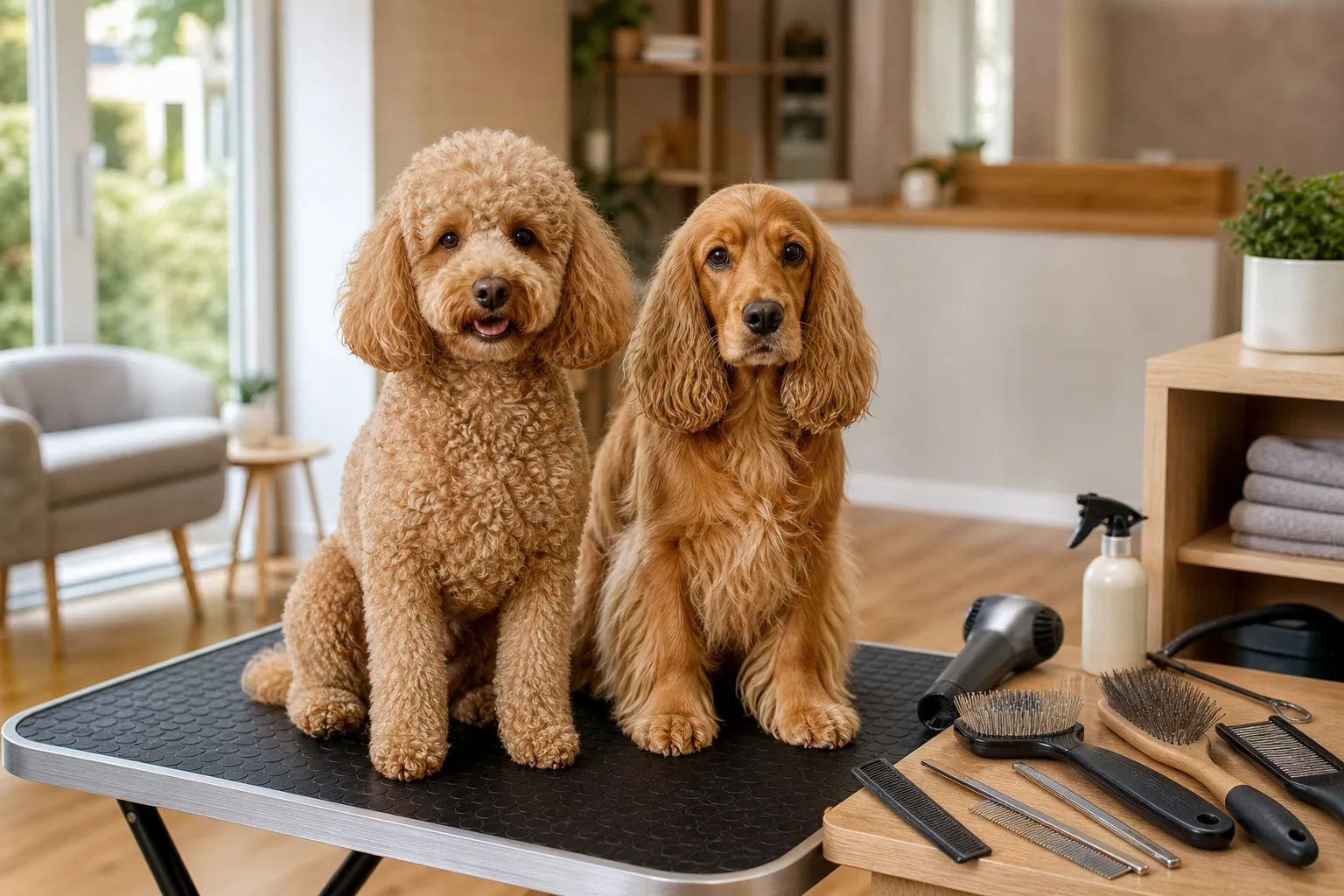
- Tight curls (ringlets, dense spirals): common in Poodles, Bichons and many Poodle-crosses. Hair is usually fine but dense and prone to close-to-skin matting. Curls disguise length but need regular clipping to keep a healthy coat.
- Loose curls and corkscrews: fall between tight curls and waves. They can matt at pressure points (behind ears, armpits) and need a blend of detangling and trimming.
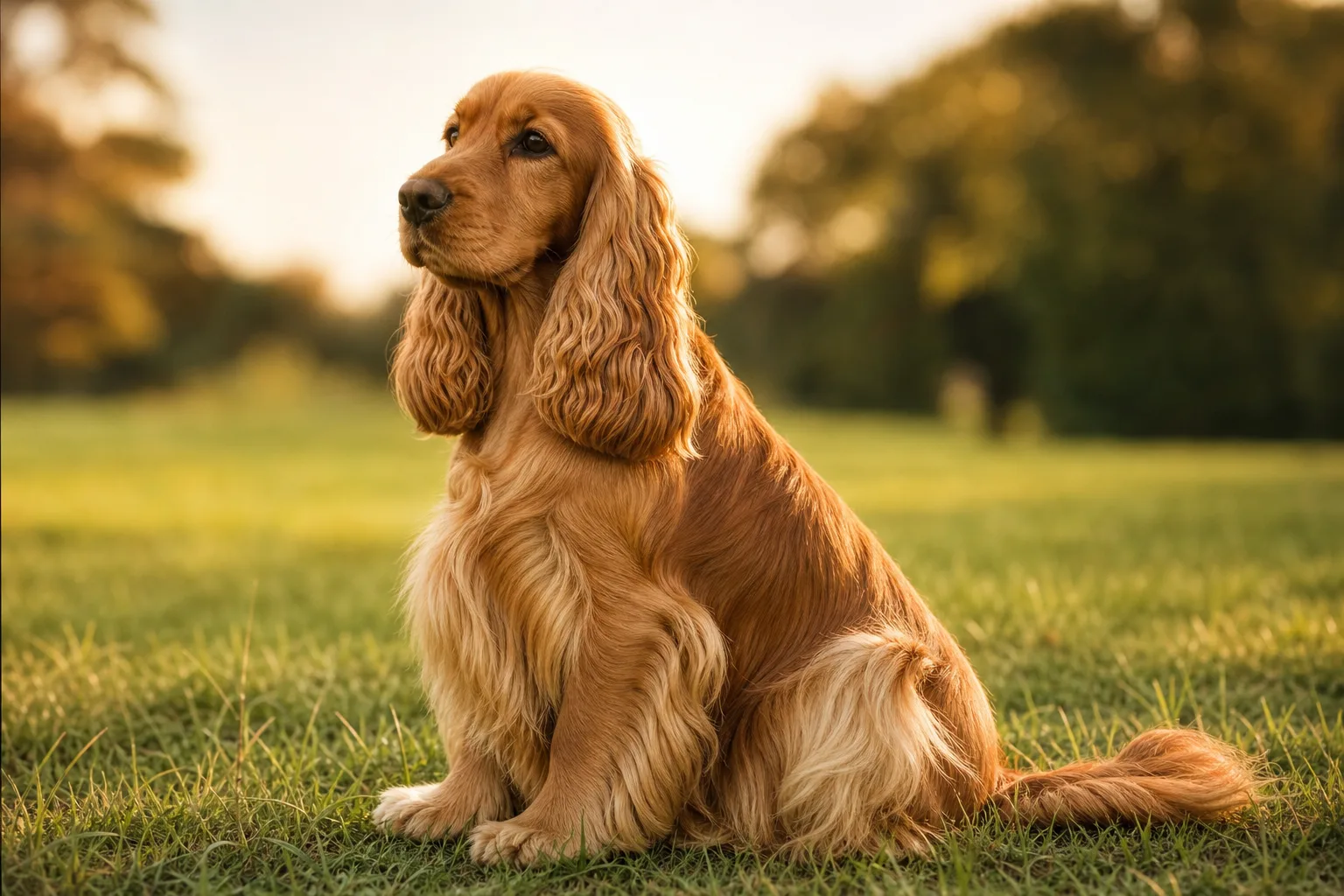
- Wavy coats: typical of spaniels, some gundogs and many mixed-breeds. Waves lie flatter, show length and sheen more readily, and usually tolerate longer intervals between full clipping.
Knowing which of these best describes your dog helps the salon choose drying methods, tools and the right cut.
How curl pattern changes salon technique
Groomers adapt almost every step to curl or wave:
- Detangling: tight curls need patient, section-by-section detangling with conditioner and the right comb. Wavy coats often brush out more quickly but can hide debris.
- Bathing and conditioning: curly coats benefit from moisture-balancing shampoos and leave-in conditioners to aid detangling; waves usually need lighter conditioning to keep bounce.
- Drying: thorough drying is essential for curls to avoid mildew and skin irritation. Wavy coats can often be towel-blotted then finished with a low-heat dryer for shape.
- Cutting and finishing: clippers and scissor work are chosen for texture — clippers for practical short styles on many curly-coated dogs; scissor finishing for a soft outline on wavy coats.
A professional groomer will assess the coat on arrival to choose tools and timings that keep the dog calm and safe.
Salon services matched to curl pattern (what to book)
Different coat needs usually map to different salon services. Below are common matches — use them as a starting point and discuss specifics with your groomer.
- Curly, dense coats
- Regular full groom — includes bath, conditioned detangling, drying and a tailored clip. Tight curls often need salon-grade drying and clipping to remove mats safely. Consider booking regular slots rather than occasional one-offs because dense curls can mat quickly. If you’re unsure, ask about a "full groom" when booking. (/services/full-groom)
- Deshedding — only for certain curly-coated crosses with seasonal shedding; a groomer will advise if this is suitable.
- Loose curls and waves
- Bath and brush — ideal between trims to keep waves glossy and free from knots.
- Full groom or tidy-up — every 6–12 weeks for shaping and to maintain ear and paw hygiene.
- Wiry or coat types needing texture work
- Hand stripping — used for some terrier and wiry breeds; not a solution for soft tight curls or typical wavy pet coats.
Always discuss your dog’s lifestyle (muddy walks, active work) and your desired look with the groomer so they can recommend a repeating service plan.
Home preparation that helps the salon visit
Good preparation makes a groom shorter and gentler. Safe, simple tasks owners can do at home:
- Brushing: establish a gentle routine—daily for tight curls, several times weekly for wavy coats. See which tools to use in our guide to brushes and combs. (/blog/choosing-the-right-brush-and-comb-for-your-dogs-coat)
- Detangling: if small tangles are present, use conditioner and short, patient strokes. If mats are tight to the skin, leave them for the groomer — attempting to cut or pull at them yourself can hurt your dog. See our step-by-step detangling advice. (/blog/safe-detangling-before-a-salon-visit-gentle-at-home-techniques-for-owners)
- Keep the dog calm before the appointment: a short walk and a quiet settling period helps reduce stress in the salon.
Avoid clipping or scissoring at home. If you want a particular style, bring photos to the salon rather than attempting a DIY trim.
Frequency and maintenance plans for curls and waves
Grooming intervals depend on coat, activity and owner time:
- Tight curly coats: salon visit every 4–8 weeks for a full groom; weekly light home brushing and fortnightly spot checks for tangles.
- Loose curls: salon tidy every 6–10 weeks; home brushing 3–5 times per week.
- Wavy coats: bath and brush every 6–12 weeks is common; home brushing 2–4 times per week depending on length.
For tailored schedules, your groomer will consider your dog’s routine and local seasonal changes — rain and mud in the UK can increase the need for salon attention. For a clearer plan tailored to breed and coat, read our guide on grooming frequency. (/blog/how-often-should-different-dog-coats-be-groomed)
What happens during a responsible groom (step-by-step)
A calm, one-to-one salon will follow predictable steps:
- Initial assessment: coat, skin, ears, feet and any behaviour concerns.
- Gentle detangling and assessment of any mats that need professional removal.
- Bath with an appropriate shampoo and conditioner; careful rinsing.
- Thorough drying with attention to heat and coat type — especially essential for curly coats.
- Clipping or scissor work to shape the coat. Finishing touches around the face, feet and sanitary areas.
- Final brush-out and owner handover with aftercare tips.
If the groom reveals a skin sore, persistent inflammation or a painful mat against the skin, the groomer should advise veterinary assessment rather than continuing cosmetic work.
Red flags — when to see a vet or specialist groomer
Book a vet or a senior groomer assessment if you notice:
- Skin broken, weeping or with strong odour.
- Mats tight to the skin causing redness, sores or obvious discomfort.
- Sudden hair loss, scaly patches or chronic scratching.
- Behavioural distress that prevents safe, calm grooming.
For nervous dogs, many salons offer specific handling and calmer appointment slots; discuss this when you book so staff can plan a gentle approach.
Practical wrap-up
Match the salon service to both curl tightness and the dog’s daily life: tight curls usually need regular full grooms with careful drying and clipping; wavy coats often benefit from regular bath-and-brush visits and periodic shaping. Prepare at home with the right brushes, gentle detangling and clear photographs of the style you want. Your local groomer in Kettering will help you build a realistic maintenance plan, and they should refer you to a vet whenever a skin or welfare concern appears.
If you’re unsure what your dog needs, bring a clear photo and a short history of their coat care to your next appointment — it helps the groomer recommend the most comfortable, effective service.
Useful further reading: our Poodle and Poodle‑cross coat guide for curl-specific tips, and practical detangling and brush-selection articles to make every salon visit smoother. (/blog/poodle-and-poodle-cross-coat-guide-styles-upkeep-and-salon-needs) (/blog/safe-detangling-before-a-salon-visit-gentle-at-home-techniques-for-owners) (/blog/choosing-the-right-brush-and-comb-for-your-dogs-coat) (/blog/how-often-should-different-dog-coats-be-groomed)
Conclusion
Choose a service that respects your dog’s curl or wave, lifestyle and sensitivity. For most curly coats a regular full groom gives the best balance of comfort and coat health; for many wavy coats, a thoughtful programme of baths, brushes and occasional shaping is enough. Always consult a qualified groomer or vet for skin, pain or severe matting issues.
Related grooming guides
- Your puppy’s first groom: how to prepare and what to expect
- Bathing frequency: signs your dog needs a wash
Frequently asked questions
How can I tell if my dog has tight curls or loose waves?
Look at how the coat lies and how easily it tangles. Tight curls form ringlets and sit close to the skin; they matt quickly. Wavy coats lie flatter and show length and sheen. If unsure, a groomer can assess during a routine visit.
Is it safe to brush out mats at home before a salon appointment?
You can gently loosen small tangles with conditioner and a comb, but never pull at tight mats close to the skin. Leave tight mats to a professional groomer to avoid pain or skin damage.
How often should I book a salon visit for a curly-coated dog?
Most tight-curled dogs benefit from a full groom every 4–8 weeks, with weekly home brushing. Frequency depends on activity, coat density and how quickly mats form.
Can hand-stripping help curly or wavy pet coats?
Hand-stripping is designed for wiry, textured coats and isn’t generally suitable for soft curly or wavy pet coats. Ask your groomer about the right technique for your dog’s coat type.
What should I tell the groomer when I book for a curly or wavy dog?
Note your dog’s curl type, recent skin issues, any behaviour or anxiety, and show a photo of the style you want. Mention if the dog has had trouble with mats or reacts poorly to handling.