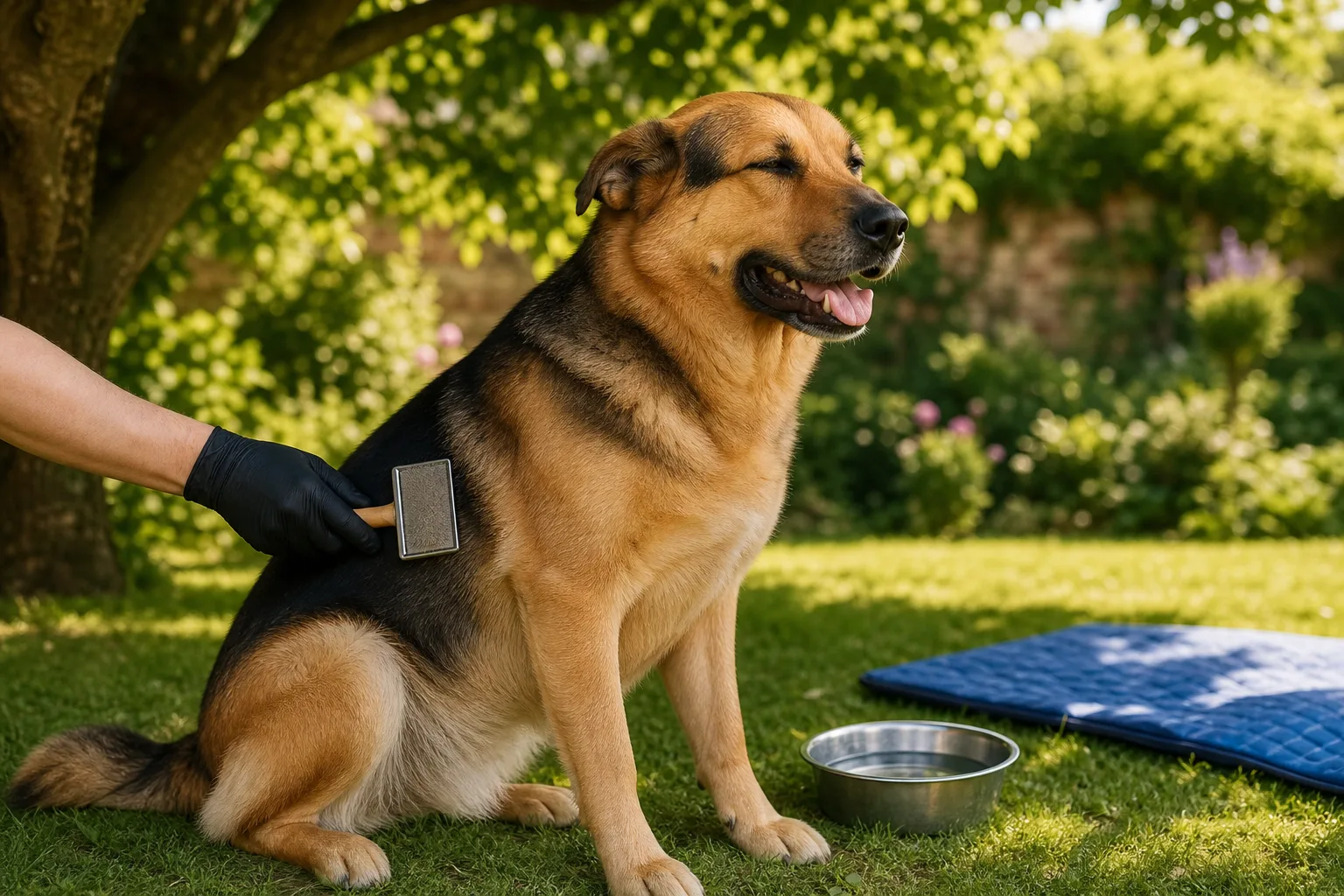
Short answer and introduction
Keep a heavy-undercoated dog comfortable in summer by working ahead: increase gentle de-shedding and brushing in the weeks leading to warmer weather, use targeted baths and conditioners when needed, manage heat with environment and timing, never routinely shave a double coat, and ask a qualified groomer or vet when the coat or skin shows problems.
Understanding the undercoat’s purpose
Double coats and thick undercoats trap air next to the skin and act as insulation both in winter and summer. Removing loose hair helps airflow and cooling, but the dense undercoat also protects skin from sunburn, overheating from direct sun, insect bites and temperature swings. The aim is to reduce loose fur and matting, not to remove the insulating layer entirely.
Plan ahead: a simple timeline
- Eight weeks before the hottest months: increase brushing sessions to catch the first seasonal moult. Regular, slow work prevents large mats and reduces the workload later.
- Four weeks out: assess for mats, skin issues or lumps—these should be seen by a groomer or vet before you start intensive home grooming.
- Two weeks out: introduce any new tools slowly and do short trial sessions so your dog accepts the routine.
- Ongoing through summer: maintain a gentle daily or every-other-day routine rather than a few frantic sessions.
Tools and techniques that make a real difference
Choose brushes and combs designed for double coats and thick undercoats. If you’re unsure which suit your dog, see our guide on Choosing the Right Brush and Comb for Your Dog’s Coat.
Essential technique tips
- Work in short, calm sessions (5–15 minutes) to keep your dog relaxed.
- Start at the neck and work back, following hair growth. Lift the topcoat gently and reach the undercoat without dragging across the skin.
- For loose undercoat use a de-shedding tool or rake carefully—only to remove loose hair, not to repeatedly dig at the same patch of skin.
- Hold the teeth of combs parallel to the skin to avoid pinching.
- Keep sessions positive with quiet praise and small rewards; avoid high-energy games immediately after grooming which could lead to heat.
When mats appear
Mats trap heat and moisture and should be handled early. Use the steps in Safe detangling before a salon visit for gentle, stepwise detangling. If a mat is tight to the skin, painful, or contains dirt or moisture, stop and book a professional groomer—trying to force it apart risks skin damage.
Bathing, conditioning and drying
Bathing can speed moult and loosen undercoat, but do it sensibly.
- Use a mild, coat-appropriate shampoo and apply sparingly—see our guidance on Bathing frequency: signs your dog needs a wash.
- Rinse thoroughly: trapped shampoo is irritating and can make a dog hotter.
- A good spray-on conditioner or detangler can reduce breakage and help remove loose hairs; review Conditioning sprays and leave‑ins: when and how to use them before choosing a product.
- Drying well is vital. A damp undercoat can hold heat and encourage skin problems. Where possible, towel dry then use a low-heat dog dryer at a distance, or allow to air-dry in shade.
Never habitually shave a double-coated dog
Shaving can temporarily remove the insulating topcoat and undercoat, but it often damages the coat's structure and exposes skin to sunburn and overheating. For humane, practical alternatives see Dealing with Seasonal Coat Changes Without Resorting to Shaving. If your dog has severe matting, a groomer may need to clip affected areas safely—always seek professional help rather than attempting aggressive clipping at home.
Heat-management beyond grooming
Grooming alone won’t prevent heat stress. Combine coat care with environmental measures:
- Walk early morning or late evening when temps are lower; pavements in Kettering can stay hot midday.
- Provide shade in gardens or use portable shade on outings.
- Offer cool (not ice-cold) drinking water regularly; refill and refresh bowls on longer walks.
- Cooling mats, paddling pools and damp towels for the belly and paws help; introduce these gradually so your dog accepts them calmly.
- Avoid cars and sealed spaces—temperatures rise quickly and are dangerous even for a short time.
Diet, health and lifestyle influences
Coat health reflects overall health. Regularly check the skin for redness, flaking, lumps, or excessive oiliness. If you notice these signs, ask your vet for assessment—skin issues can make a dog intolerant of heat or grooming.
Good practices that support a comfortable coat
- Keep routine flea and tick prevention up to date.
- Maintain a balanced diet suited to your dog’s life stage; our article on How Diet and Grooming Work Together to Support a Healthy Coat explains the basics.
- Make grooming part of everyday life rather than a rare event—see Everyday brushing routines for different coat types for step-by-step plans.
When to involve professionals
Book a qualified groomer if:
- The coat has tight mats, skin sores, or severe tangles.
- You need a safe, even trim for hygiene reasons around rear, feet or sanitary areas.
- Your dog is anxious, or you lack the tools or confidence to detangle without causing pain.
See a vet promptly if you notice:
- Signs of heat-related illness (heavy panting, collapse, drooling, disorientation).
- New or spreading skin redness, hair loss, scabs, or persistent scratching.
Local considerations for Kettering and Barton Seagrave
Summer in Northamptonshire can bring warm spells and sudden humidity. Avoid midday walks on Kettering pavements; opt for Grafton Park or the shady routes around Barton Seagrave. If you prefer a professional hand, choose a one-to-one salon that understands double coats and seasonal moulting so your dog is handled calmly and assessed individually.
Practical day-to-day checklist
- Daily: quick brush or comb in problem areas (armpits, behind ears, rear, chest).
- Twice weekly: fuller grooming session with de-shedding tool if your dog tolerates it.
- Monthly: bath if needed, followed by thorough drying and gentle trimming of hygienic areas by a groomer.
- Always: monitor water intake, shade, and energy levels in warm weather.
Conclusion
Preparing a dog with a thick undercoat for summer is about steady, gentle work rather than drastic measures. Start early, use the right tools, combine grooming with sensible heat-management, and involve a qualified groomer or vet when mats or skin issues appear. With a calm plan, you can keep your dog comfortable and protected through the warmer months without compromising the coat’s natural functions.
Frequently asked questions
Can I shave my double-coated dog to keep them cool?
No—shaving a double-coated dog often damages the coat and removes natural protection. Instead, use de-shedding, regular brushing and professional trimming of problem areas; consult a groomer if you consider any clipping.
How often should I brush a dog with a thick undercoat in summer?
Aim for short daily or every-other-day brushing during moult peak, with fuller sessions 1–3 times a week using a de-shedding tool or rake as tolerated to remove loose undercoat.
When should I see a vet or professional groomer?
See a groomer for tight mats, heavy tangles or if you need safe clipping. See a vet for skin sores, sudden hair loss, persistent itching or any signs of heat illness.
Will more baths help my dog stay cooler?
Baths can help remove loose hair and cool a dog, but use them sparingly with appropriate shampoo, rinse thoroughly and dry well to avoid skin irritation or retained dampness.
What environmental steps help most alongside grooming?
Provide shade and fresh water, avoid midday walks, use cooling mats or paddling pools and adjust exercise to cooler times—these measures often have the biggest impact on comfort.