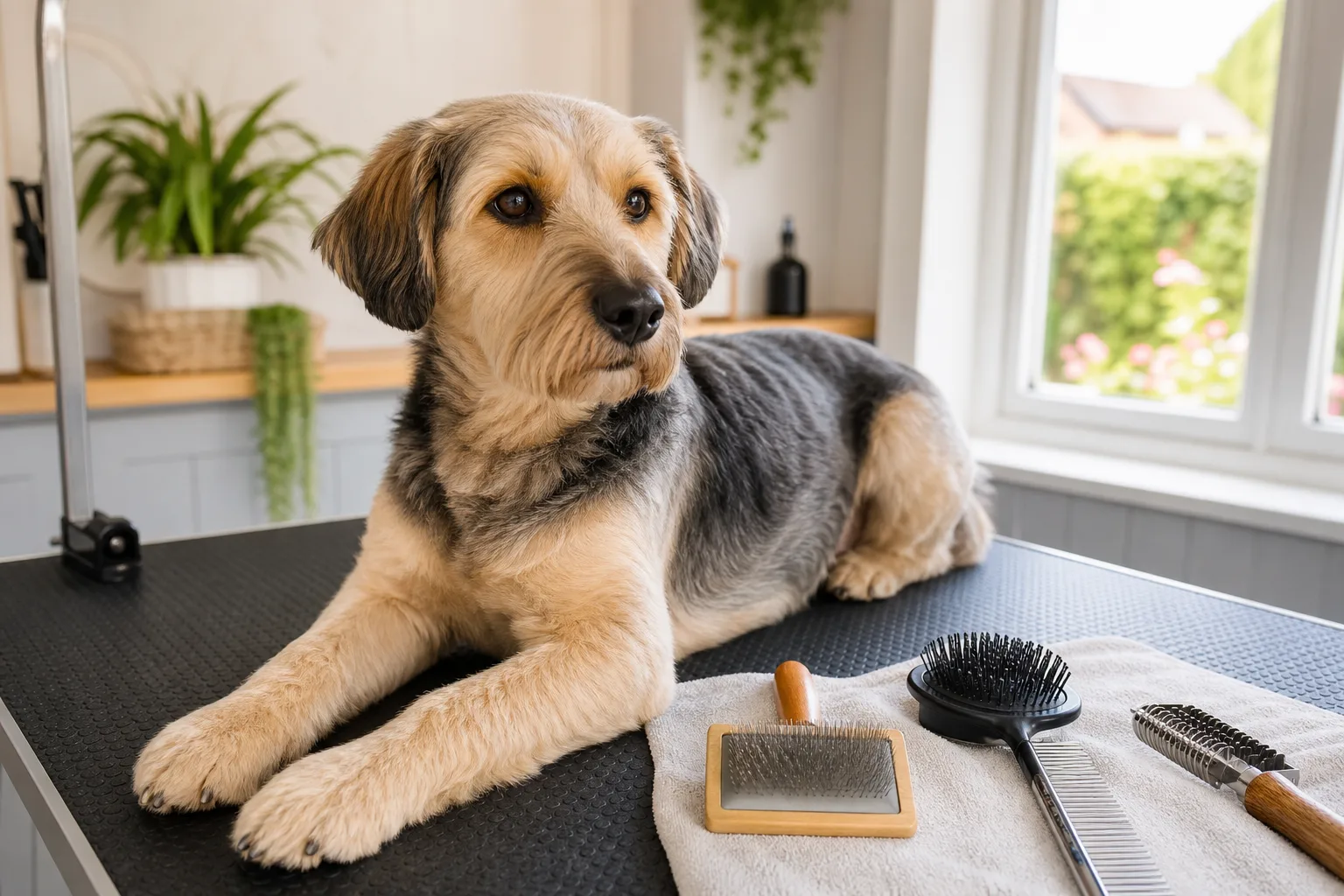
Quick answer
Match the brush and comb to your dog’s coat: short smooth coats do best with a rubber or bristle brush and a medium-toothed stainless-steel comb; double coats need an undercoat rake for shedding plus a slicker for finishing; long or silky coats suit a pin brush and a wide-tooth comb for detangling; curly coats work well with a slicker and wide-tooth comb; wiry coats benefit from firm pin brushes and specialist stripping tools used by professionals. Always choose comfortable handles and stainless steel where hygiene matters, and ask a qualified groomer or vet when skin, matting or behaviour is a concern.
Introduction
Choosing the right brush and comb makes routine grooming quicker, more comfortable for your dog and more effective. This guide explains which tools suit common coat characteristics, how to combine brushes and combs in your routine, practical buying tips for UK owners, and when to contact a professional groomer or your vet. Wherever you are near Kettering or Barton Seagrave, the right tools will save time and keep your dog’s coat healthy.
Understanding coat characteristics
- Short, smooth coats: lie flat against the body (e.g., Staffordshire Bull Terriers, Beagles). They shed but don’t tangle.
- Double coats: dense undercoat beneath a top coat (e.g., Huskies, Labradors). Heavy seasonal shedding.
- Long or silky coats: single-layer, prone to tangles (e.g., Cockers, Afghan mixes).
- Curly coats: tight curl or wave that resists tangling but can trap debris (e.g., Poodles, Bichons).
- Wiry coats: coarse, stiff hairs that form a protective layer (e.g., terriers). Often require hand-stripping professionally.
Matching brushes to coat types
- Rubber or curry brushes (short coats)
- Best for: short, smooth and soft coats.
- Why: removes loose hair, distributes natural oils and is gentle on the skin.
- Use: quick, daily strokes; ideal for fast tidy-ups after walks.
- Bristle brushes (short to medium coats)
- Best for: finishing and adding shine on short to medium coats.
- Why: natural bristles lift loose hair and smooth the coat.
- Use: gentle finishing strokes once the main loose hair is removed.
- Slicker brushes (double, curly, long)
- Best for: removing loose undercoat, small tangles and surface debris.
- Why: fine wire pins sit on a slightly flexible pad to remove loose hair without cutting.
- Use: short, light strokes; hold the skin between brush strokes to avoid pulling.
- Pin brushes (long and silky coats)
- Best for: detangling and maintaining length.
- Why: rounded pins glide through long hair with less breakage.
- Use: start at the tips and work up; use alongside a wide-tooth comb to check for hidden tangles.
- Undercoat rakes or de-shedding tools (double coats)
- Best for: removing dead undercoat without damaging topcoat.
- Why: long tines reach the undercoat and pull loose hair out.
- Use: gentle passes in the direction of hair growth; not for thin-skinned or clipped dogs.
- De-matting tools (mats only)
- Best for: breaking down mats that are too big for combs.
- Warning: use carefully; deep or tight mats can pull on the skin and should be seen by a qualified groomer.
Matching combs to coat types
- Wide-tooth combs
- Best for: long, curly or heavily textured coats.
- Why: opens out tangles without snagging.
- Use: work through large tangles gently, holding the base of the hair to protect the skin.
- Medium/fine-tooth stainless-steel combs
- Best for: checking for small tangles, finishing coats, and finding fleas or debris.
- Why: metal teeth stay sharp and glide through the coat better than cheap plastics.
- Use: run through the coat after brushing to spot missed knots and ensure even grooming.
- Flea combs
- Best for: short to medium coats when you need to comb close to the skin.
- Use: check regularly if fleas are suspected and follow veterinary advice for treatment.
Selecting material and construction
- Stainless steel teeth and pins: durable, cleanable and gentle if well finished. Avoid rough or poorly finished metal.
- Natural bristles (boar hair): excellent for shine but don’t use on very soiled coats — they trap dirt.
- Nylon pins and plastic combs: lighter and cheaper but choose sturdy, well-spaced teeth; they can warp with heat or heavy use.
- Handle and grip: ergonomic, non-slip handles reduce wrist strain during longer sessions.
Size and spine strength for dog size
- Small dogs: choose smaller heads and shorter handles so you can manoeuvre around the body.
- Large dogs: larger head sizes cover more area and reduce grooming time.
- Be realistic: a tool that’s too big or flimsy for your dog will be hard to use and could stress the dog.
How to introduce tools and build a routine
- Make grooming positive: pair brushing with treats, short praise and calm handling.
- Start slowly: 1–2 minutes at first, then build to the recommended time for your coat type. For puppies, see our guide on preparing for their first groom for a calm introduction. (/blog/puppy-first-groom)
- Sequence: remove larger tangles with a wide-tooth comb or de-matting tool first, then follow with a slicker or pin brush and finish with a bristle brush and fine-tooth comb for shine.
- Frequency: follow coat-specific routines — our everyday brushing guide gives step-by-step routines for different coat types. (/blog/everyday-brushing-routines-for-different-coat-types)
Practical technique tips
- Work in sections for long or thick coats.
- Hold the base of the hair when tackling tangles to reduce pulling.
- Use short strokes with a slicker brush and longer strokes with bristle or pin brushes.
- Keep sessions calm and stop if your dog shows clear signs of stress.
When to see a professional groomer or a vet
See a qualified groomer if:
- Mats are deep, close to the skin or cover a large area — they can remove mats safely or recommend coat management.
- You need breed-specific work such as hand-stripping a wiry coat.
See your vet if:
- You notice hair loss, inflamed or scabby skin, sores, or a sudden change in coat quality — these can be signs of underlying medical issues.
- Mats are causing visible discomfort, skin folds are red or weeping, or you suspect parasites.
If in doubt, get a professional assessment. A groomer can recommend tool types and a brushing schedule; a vet can rule out health causes for grooming problems.
Tools to avoid at home
- Avoid using scissors to cut out mats yourself — this risks cutting the skin. Let a professional groomer assess and remove serious mats. Never attempt invasive procedures, chemical treatments or forceful restraint at home.
Buying checklist (quick)
- Match tool to coat type and dog size.
- Prefer stainless steel for combs and well-finished pins for brushes.
- Look for ergonomic handles and a durable build.
- Start with a slicker + wide-tooth comb for most mixed coats; add an undercoat rake for heavy shedders.
Conclusion
The right brush and comb depend on your dog’s coat structure, size and temperament. Invest in quality, learn gentle techniques and link your routine to seasonal needs. If you live near Kettering or Barton Seagrave and are unsure which tool set to buy, speak to a local qualified groomer — they can show tools in person and advise on routines and professional maintenance. For step-by-step brushing schedules, see our everyday brushing routines and how often to groom different coat types. (/blog/everyday-brushing-routines-for-different-coat-types) (/blog/how-often-should-different-dog-coats-be-groomed)
Related grooming guides
Frequently asked questions
Which single brush is best if I only want one for my dog?
Choose a slicker brush for most mixed or long coats — it handles light tangles and loose undercoat. Pair it with a wide-tooth comb when you can for heavier tangles.
How often should I comb a double-coated dog?
Comb or rake a double coat 2–3 times a week off-shedding season and daily during heavy shedding to remove loose undercoat and prevent mats.
Can I use a human comb or brush on my dog?
Avoid human tools: dog coats and skin differ. Use tools designed for dogs — stainless-steel combs and brushes with rounded pins are safer and more effective.
When should I stop and get professional help for mats?
If mats are tight to the skin, cover large areas, or cause your dog pain, stop home grooming and book a qualified groomer to assess and remove them safely.
Which comb is best for checking fleas?
Use a fine-tooth stainless-steel flea comb close to the skin; dip teeth in soapy water after each pass to check for live fleas or flea dirt, and consult your vet for treatment.