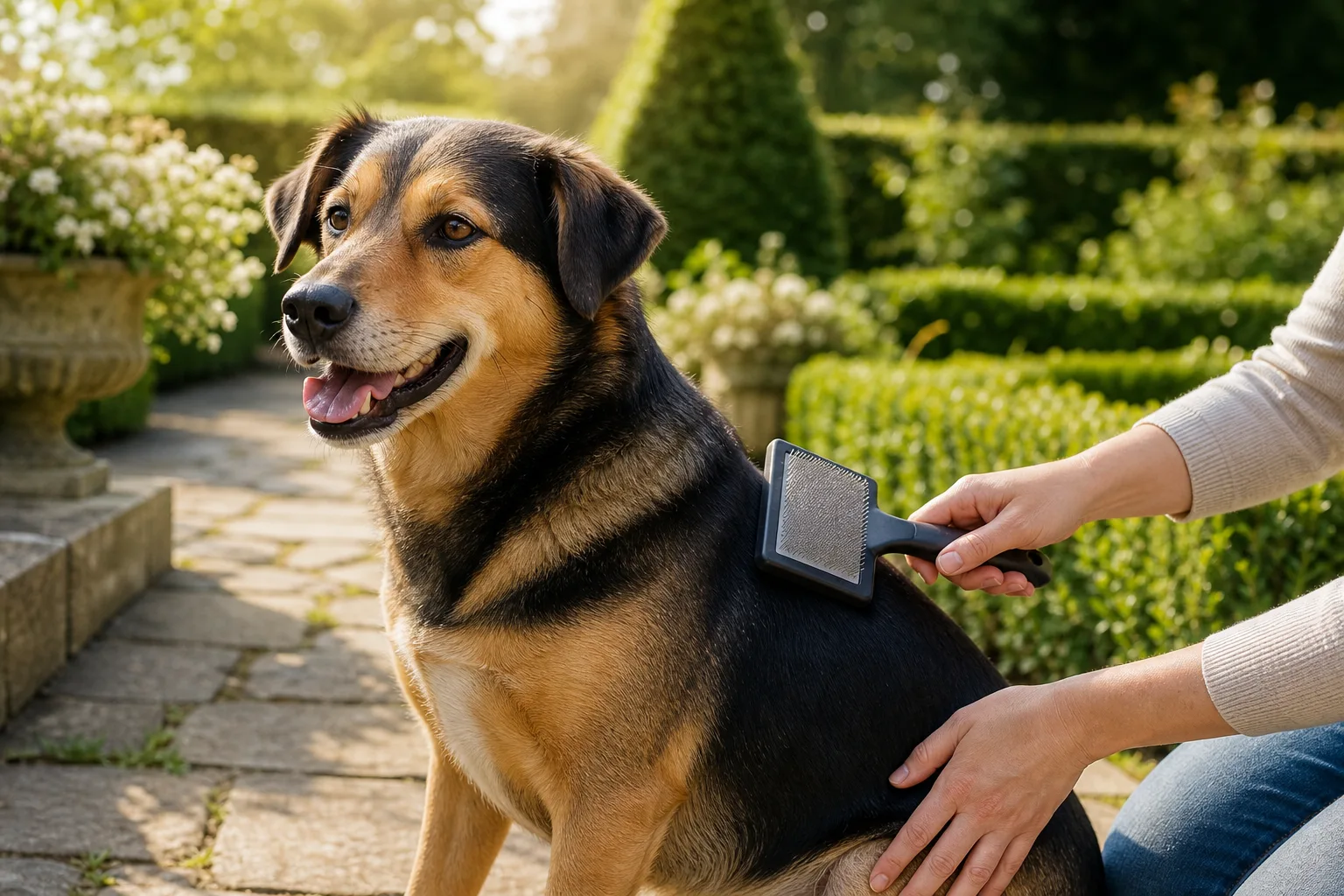
Answer: A healthy coat and skin are evident when the fur looks even and clean, the skin is supple and free of persistent flakes or sores, the dog’s natural smell is mild, and the coat responds well to gentle brushing.
Introduction
A well‑maintained coat is often the first sign that a dog is comfortable and well cared for. This article gives UK owners practical, non‑diagnostic visual and tactile cues to recognise a healthy coat and skin at home. The checks below are general, non‑clinical observations — they do not replace veterinary assessment. If you see worrying signs, contact your vet or a qualified groomer for professional advice.
Why non‑diagnostic signs matter
Many owners want to know what “normal” looks and feels like between vet visits. Regular, simple checks let you spot change early and keep routine care on track. These cues are also useful when preparing for a groom or discussing your dog’s condition with a professional in Barton Seagrave or Kettering.
H2: Quick visual checks for a healthy coat
H3: Overall appearance
- Even coverage: A healthy coat looks uniform for the dog’s breed and age — no large, sudden patches of missing hair.
- Natural sheen: Not a greasy shine, but a soft, subtle gloss that follows light along the hair shaft.
- Colour consistency: Coat colour may vary with age or season, but abrupt darkening, dulling or mottling can suggest an issue to check.
H3: Skin surface and integrity
- No persistent flakes: A few dry specks can happen; widespread dandruff or constant flaking is a sign to investigate.
- No open sores or scabs: Superficial marks from play are common; persistent sores or bleeding need a professional assessment.
- Even texture: Skin should lie smoothly beneath the coat without thickened patches or crusts.
H3: Movement and coat behaviour
- Ease of parting: You should be able to part the hair along the back and shoulders without seeing frightening mattes or dense clumps.
- Minimal matting: Small tangles can be removed at home with care — large, tight mats or felted areas usually need a groomer.
- Seasonal changes: Expect thicker undercoats in autumn and spring shedding; heavy seasonal change is normal for many breeds.
H2: Tactile cues — what you can feel
H3: Texture and resilience
- Smooth and pliable: Healthy skin feels springy, not hard or papery. The coat should feel neither greasy nor overly dry.
- Undercoat density appropriate for breed: Some dogs naturally have a dense undercoat; others are single coated. Know your dog’s type so you know what to expect.
H3: Scalp and hair shaft checks
- Gentle parting: Part the coat down the back and feel the skin. It should be cool-to-warm, not hot, and without obvious lumps beneath the hair.
- Hair pull test (gentle): Smoothly run two fingers along the fur to pick up loose hair. Light shedding is normal; if hair pulls out in tufts, seek professional advice.
H3: Smell and comfort
- Mild, neutral scent: A healthy dog has a subtle, clean smell. Strong, sour or offensive odours often indicate skin infection or ear problems that need a vet.
- Calm response to touch: If your dog flinches, tries to nip, or shows repeated discomfort when you touch certain areas, have a groomer or vet assess them rather than forcing checks at home.
H2: Routine care that supports healthy skin and coat
- Regular brushing: Match frequency to coat type — short coats may need weekly attention, while long or double coats often benefit from daily or near‑daily brushing. See our guide on Choosing the Right Brush and Comb for Your Dog’s Coat for tool selection. (/blog/choosing-the-right-brush-and-comb-for-your-dogs-coat)
- Practical bathing: Only bathe as needed to avoid stripping natural oils. For guidance on when to bathe, consult our bathing frequency article. (/blog/bathing-frequency-signs-your-dog-needs-a-wash)
- Appropriate tools: Use safe, quality tools and learn correct handling to avoid damage; our overview of coat‑care tools explains what each does and how to use them safely. (/blog/coat-care-tools-every-owner-should-own-what-they-do-and-how-to-use-them-safely)
- Gentle detangling before salon visits: If you find loose tangles, use gentle at‑home detangling techniques to make a groom less stressful — but leave heavy matting to a professional. (/blog/safe-detangling-before-a-salon-visit-gentle-at-home-techniques-for-owners)
H2: Simple at‑home checks (step‑by‑step, safe and calm)
- Find a calm moment: Sit with your dog in a familiar place and reward them with a treat. Keep sessions short.
- Visual sweep: Do a quick scan from head to tail for uneven patches, flakes, or obvious lumps.
- Part and inspect: Gently part the fur along the back and sides and look for skin colour, flakes, or moisture.
- Feel test: Use the flat of your hand to feel for warmth, bumps, or greasiness. Keep pressure light.
- Record changes: Note anything new and take a photo if you intend to discuss it with a groomer or vet.
H2: When to contact a vet or qualified groomer
Seek veterinary advice promptly if you notice:
- Persistent, spreading hair loss or sudden bald patches.
- Red, hot or painful skin; open sores, bleeding or severe scabbing.
- Strong, unpleasant odour from skin or ears.
- Repeated, intense scratching, rubbing, or biting that disrupts sleep or daily life.
Contact a qualified groomer if you notice:
- Thick, tight matting or felted areas that could cause discomfort.
- Coat conditions that you can’t safely manage at home (e.g., heavy matting, severely overgrown nails, complex clipping needs).
Note: These suggestions are non‑diagnostic. Only a vet can diagnose skin disease or allergy. If in doubt, contact your local vet or a qualified groomer in the Kettering area.
H2: Practical examples and quick troubleshooting
- Dull, slightly greasy coat after a muddy walk: A targeted bath using a dog shampoo suited to the coat type usually restores appearance. Refer to bathing guidance above and avoid over‑bathing.
- Small dry patches after seasonal change: Increase gentle brushing and monitor. If patches persist or spread, ask your vet.
- Strong odour with redness: Do not treat at home — see your vet as this can indicate infection.
Conclusion
Recognising a healthy coat and skin comes down to regular observation and gentle, consistent care. Look for even coverage, a natural sheen, supple skin and a mild scent. Use appropriate tools and routines, and involve a qualified groomer or vet when problems are outside routine care. Small, calm checks in your Kettering home or garden will keep you familiar with what’s normal for your dog and help you act quickly if things change.
Related grooming guides
Frequently asked questions
How often should I check my dog’s skin and coat?
Do a quick visual and tactile check once or twice a week. For long or double coats, a brief daily brush keeps you aware of changes and prevents tangles.
What does a greasy coat mean?
A persistently greasy or sticky coat can suggest over‑active skin oils, poor drying after a bath, or a skin issue — if it doesn’t clear with a proper wash and drying, consult your vet.
Is a bit of flaking normal?
Occasional small flakes are common, especially in cold weather. Widespread or continuous dandruff, especially with itching or redness, should be checked by a vet.
Can I remove mats at home?
Small, loose tangles can often be removed with patience and the right tools, but tight or skin‑skimming mats can cause pain and are best handled by a professional groomer.
When should I see a vet instead of a groomer?
See a vet for painful, hot, bleeding or rapidly spreading skin problems, intense itching, sudden hair loss or a strong offensive odour — these are medical concerns rather than cosmetic ones.