A simple way to think about coat care
Every dog is different, but coats fall into familiar types that need predictable levels of attention. Where you live in the UK — including the changeable weather around Barton Seagrave and Kettering — will affect shedding and matting, so adapt these suggestions to your own dog.
This guide focuses on two things: how often to brush at home, and how often to book professional grooming. I work one-to-one with dogs, so I see how calmer, personalised sessions help dogs cooperate and get the right finish.
Quick coat-frequency guide
- Short smooth coats (eg. Beagle, Boxer): brush once a week; professional groom every 3–6 months as needed. Short double coats (eg. Husky) may need extra seasonal brushing.
- Short double coats (eg. Labrador, Corgi): brush 2–3 times a week, increase in spring/autumn; professional de-shedding or tidy every 3–6 months.
- Medium single coats (eg. Spaniels, Terrier mixes): brush 3 times a week; professional groom every 6–8 weeks for trims and to prevent mats.
- Medium to long double coats (eg. Border Collie): brush several times a week; professional grooming every 8–12 weeks, plus attention during heavy moult seasons.
- Long flowing coats (eg. Afghan, Lhasa Apso): daily brushing to prevent tangles; professional grooming every 4–8 weeks depending on the desired style.
- Curly, non-shedding coats (eg. Poodle, Bichon): brush several times a week and comb through; professional clipping every 4–8 weeks to maintain shape.
- Wire-haired coats (eg. Schnauzer, Wire Fox Terrier): brush weekly and hand-strip or clip professionally every 8–12 weeks depending on finish required.
Brushing at home — short, regular sessions win
Regular brushing is the most important thing you can do. Short sessions (5–10 minutes) are better than long, infrequent ones. They remove loose hair, prevent mats forming and are a good chance to check skin, ears and paws.
Use the right tool for the job: slicker brushes and combs for medium and long coats, bristle brushes for short coats, and undercoat rakes for double-coated dogs. If your dog is nervous, build a calm routine: gentle praise, short sessions and treats can help them enjoy grooming.
Professional grooming — what to expect
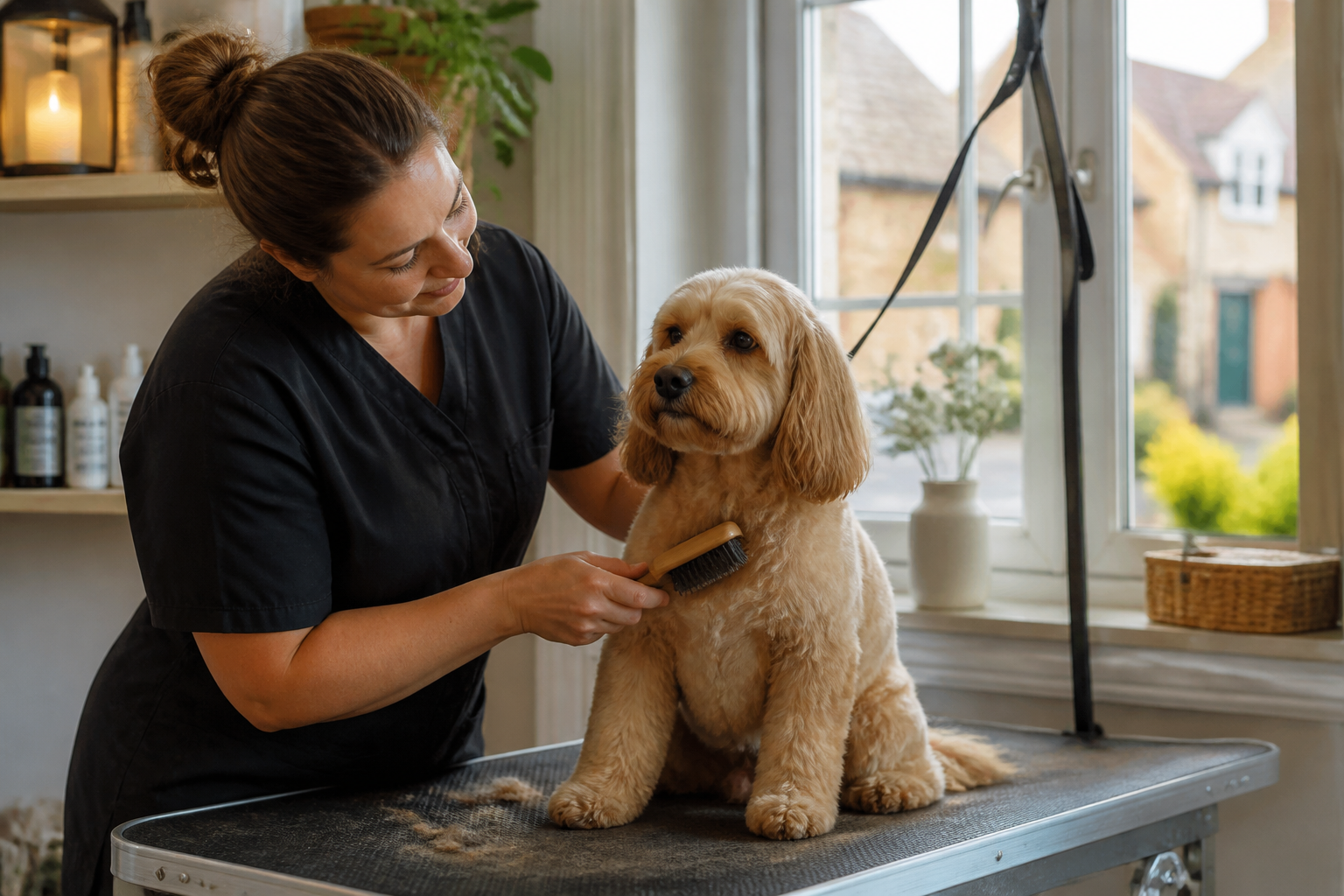
Professional visits are for more than just a tidy-up. A groomer will handle bathing, drying, clippering or scissoring and more thorough de-matting. For one-to-one groomers, time is taken to manage anxious dogs calmly and work at a pace that suits them.
How often you book depends on coat type, lifestyle and the look you prefer. For example, a pet Poodle kept short will need visits every 4–6 weeks, whereas a Labrador might only need an occasional tidy every few months.
Seasonal considerations for Kettering and Barton Seagrave
In our part of Northamptonshire, dogs tend to moult more heavily as spring approaches and again in autumn. This means you may need to brush more often during those periods and consider an extra professional tidy if your dog is producing a lot of loose undercoat.
Weather also matters: damp conditions can encourage matting in longer coats, so check and dry your dog after walks in wet weather.
Practical tips to keep coats healthy between grooms
Small, regular habits make the biggest difference. Try these:
- Keep a grooming kit near the door for quick touch-ups after walks and to encourage routine
Use a gentle, dog-specific shampoo if you bathe at home and always dry thoroughly to avoid damp hairs tangling. If your dog has trouble with grooming, a one-to-one groomer can show you handling tips and build positive experiences so sessions go more smoothly.
When to ask a groomer for advice
If you’re unsure how often to book, ask a groomer for a coat assessment. They can recommend a realistic schedule and show you brushing techniques tailored to your dog. A calm, one-to-one session is especially helpful if your dog finds grooming stressful — it allows the groomer to go slowly and adapt to your dog’s needs.
Every dog is unique. Use these guidelines, watch how your dog’s coat responds across the seasons, and adjust as needed. If you’re local to Barton Seagrave or Kettering and would like a calm, personalised grooming approach, your groomer can help you create a plan that fits your dog and your routine.